




What's Happening?
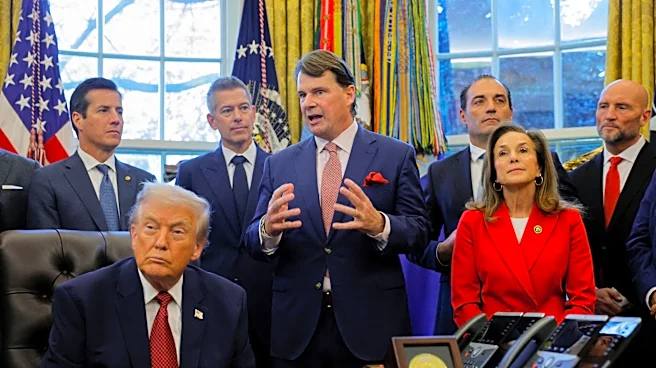
Six prominent U.S. auto industry groups, including the Alliance for Automotive Innovation, have sent a letter to President Trump, urging him to continue blocking Chinese automakers from entering the U.S. market. This collective action, which includes
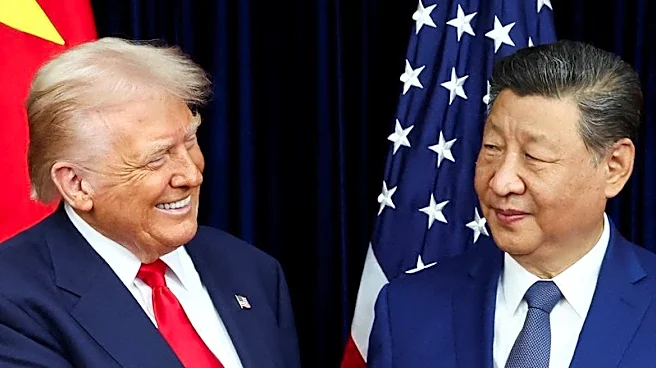
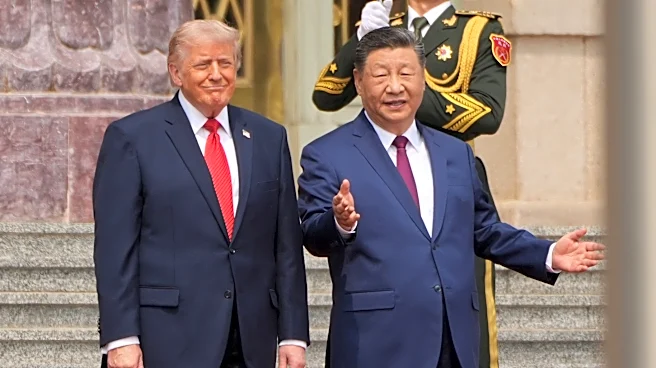
major Japanese, American, and European automakers like General Motors, Toyota Motor, and Ford Motor, comes ahead of a scheduled U.S.-China summit. The industry groups expressed concern that the administration might make concessions to China regarding market access for vehicles. The letter, dated September 18, emphasizes the need to maintain policies that prevent Chinese manufacturers from selling, importing, or producing vehicles in the United States. They argue that allowing Chinese companies to establish facilities on U.S. soil poses national security threats and economic risks, and would not significantly contribute to job creation goals, especially if supply chains remain in China. This move was triggered by President Trump's recent comments in a September 11 interview, where he indicated openness to Chinese companies building factories in the U.S., despite maintaining a negative stance on imported Chinese-built vehicles.
Why It's Important?
This collective appeal from the U.S. auto industry highlights significant concerns over national security and economic stability. The industry fears that allowing Chinese automakers to establish a presence in the U.S. market, even through domestic production, could undermine existing manufacturers and potentially expose critical supply chains to foreign influence. The letter underscores the industry's belief that the job creation benefits from such ventures would be limited if parts supply chains remain in China, thus not aligning with the administration's stated goals. For U.S. consumers, this could mean a continued absence of Chinese-branded vehicles, potentially limiting competition and choice, though it aims to protect domestic jobs and manufacturing capabilities. The timing of the letter, just before a high-stakes U.S.-China summit, indicates the industry's proactive stance in influencing trade negotiations and safeguarding its interests against potential policy shifts that could favor Chinese market entry.
What's Next?
The immediate next step will be the U.S.-China summit, where the issue of market access for Chinese vehicles could be a bargaining chip in broader trade negotiations. The auto industry groups will likely continue to monitor the administration's stance and any potential policy changes following the summit. President Trump's administration will need to reconcile its desire for domestic job creation with the industry's national security and economic concerns regarding Chinese market entry. Stakeholders, including political leaders, businesses, and civil society groups, will be closely watching for any indications of shifts in U.S. trade policy towards China in the automotive sector. The industry's vigilance also extends to potential indirect entry routes for Chinese players, such as production in Mexico, which could circumvent current U.S. tariffs and restrictions.
Beyond the Headlines
Beyond the immediate economic and national security implications, this situation touches upon the broader geopolitical competition between the U.S. and China. The auto industry's concerns reflect a growing apprehension across various sectors about China's strategic economic expansion and its potential impact on U.S. industrial capabilities and technological leadership. The debate over allowing Chinese companies to establish manufacturing facilities in the U.S. also raises questions about the definition of 'domestic production' and its true benefits if critical components and intellectual property remain tied to foreign entities. This scenario could trigger long-term shifts in global automotive supply chains, potentially leading to increased scrutiny of foreign investments in critical U.S. industries and a re-evaluation of trade policies to balance economic openness with national security imperatives. The ethical dimension involves balancing free market principles with the protection of domestic industries and national interests.