





What's Happening?
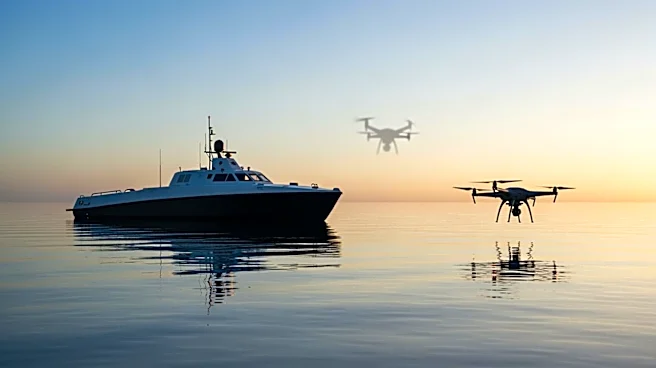
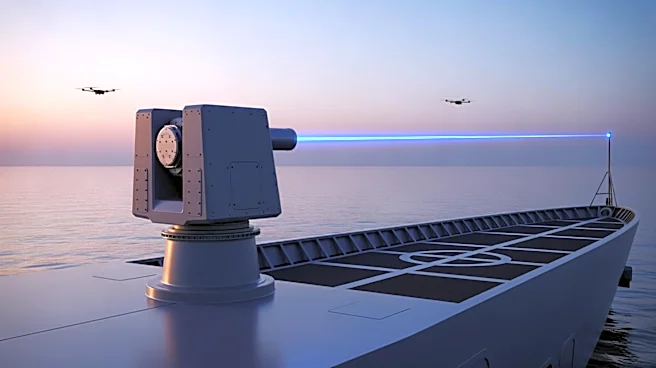
AeroVironment has announced the successful naval trials of its Locust laser weapon system, designed to counter drone threats. The system was tested on the USS George H.W. Bush aircraft carrier, where it effectively tracked and neutralized multiple drone targets.
These trials were conducted in collaboration with the U.S. Navy and the U.S. Army Rapid Capabilities and Critical Technologies Office. The Locust system, which is deployed in a palletized form, aims to provide a low-cost-per-kill solution against drone and drone-swarm attacks, a growing concern for the U.S. Navy and its allies, particularly in the Middle East. AeroVironment is also developing a higher-energy version of the system, the Locust X3, to target small to medium-sized uncrewed aircraft systems.
Why It's Important?
The successful testing of the Locust laser weapon system represents a significant advancement in naval defense capabilities, particularly in countering the increasing threat of drones. As drone technology becomes more accessible, the potential for drone-swarm attacks poses a serious risk to military and civilian targets. The development of cost-effective and efficient counter-drone systems is crucial for maintaining security and operational effectiveness. The U.S. Navy's interest in such technologies underscores the strategic importance of protecting naval assets and ensuring maritime security, especially in volatile regions like the Middle East.
What's Next?
Following the successful trials, AeroVironment plans to expand the deployment of the Locust system across various naval platforms. The company is also looking to scale up its technology to address higher-end threats, aligning with the Pentagon's Golden Dome system. This expansion could lead to broader adoption of laser-based defense systems within the U.S. military and potentially among allied forces. The ongoing development and deployment of such technologies will likely influence future defense strategies and procurement decisions.