





What's Happening?
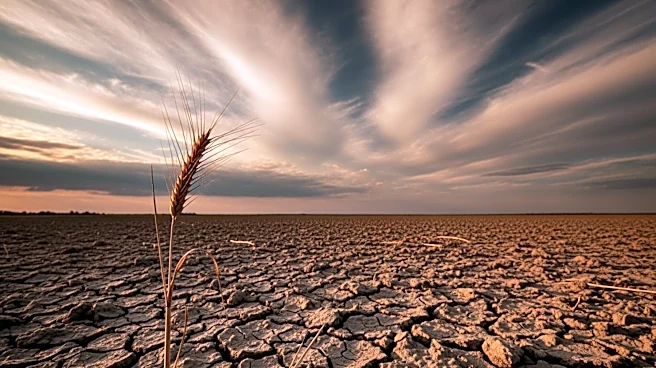
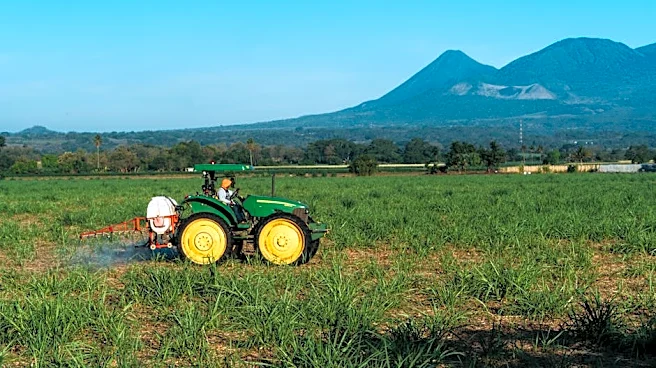
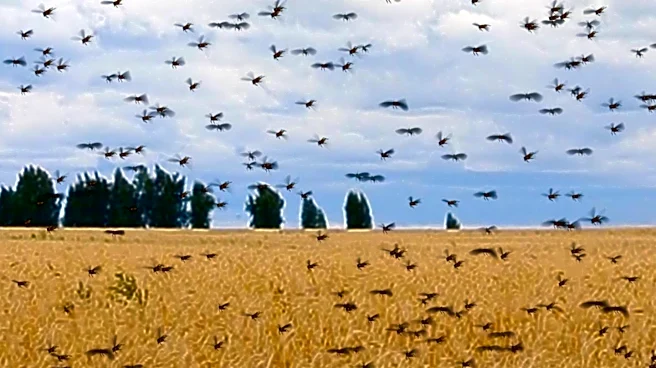
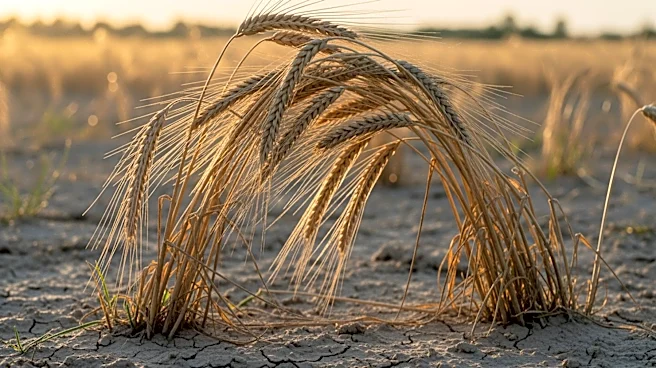
Eastern Iran is experiencing a severe agricultural crisis due to a massive outbreak of Moroccan locusts, which are devastating crops and pastures. The locust swarms, exacerbated by ongoing drought conditions, are threatening the livelihoods of thousands
of households. Authorities are deploying pesticides and advising farmers to delay harvesting to mitigate the impact. The locusts primarily feed on grain crops and other essential agricultural products, posing a significant threat to food security in the region.
Why It's Important?
The locust outbreak in Iran highlights the intersection of environmental challenges and food security issues. With Iran already facing water shortages and economic difficulties, the locust invasion could lead to severe food shortages and economic instability. This situation underscores the need for effective agricultural management and climate adaptation strategies to protect vulnerable communities from similar crises in the future.
What's Next?
Iranian authorities are likely to intensify pest control measures and seek international assistance to manage the locust crisis. There may be increased focus on developing sustainable agricultural practices and improving water management to prevent future outbreaks. The situation could also prompt regional cooperation to address shared environmental challenges.