


What's Happening?
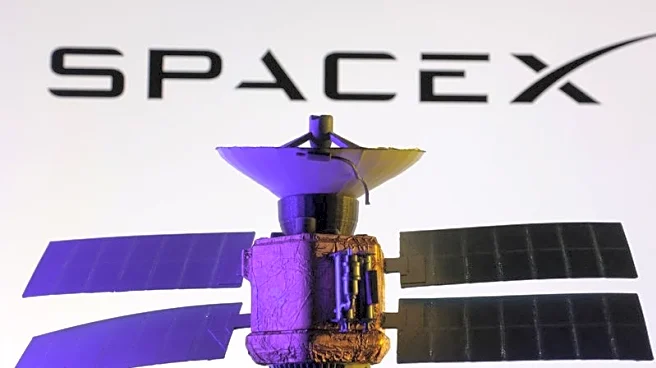
Starlink's Direct-to-Cell (D2C) service, operated by SpaceX, has registered over 3 million users in Ukraine since its commercial launch in November 2025. The service, which is part of a low-earth-orbit satellite network, has delivered more than 1.2 million SMS
messages. It is particularly vital in regions where terrestrial infrastructure is damaged or under restoration, such as the southern and eastern parts of Ukraine. The service is available to Kyivstar's 4G smartphone subscribers as part of their regular plans, covering approximately 19% of its 15.5 million 4G users. The initial rollout is limited to SMS, with plans to expand to voice and video services as more satellites are launched. The service is currently available only on Android devices, with iPhone compatibility expected after a software update.
Why It's Important?
The rapid adoption of Starlink's D2C service highlights the critical role of satellite-based connectivity in enhancing resilience and digital infrastructure, especially in conflict-affected areas. This development underscores the growing demand for reliable communication services in regions with compromised terrestrial networks. For SpaceX, this expansion not only strengthens its market presence but also positions it as a key player in global telecommunications, potentially influencing future regulatory and market dynamics. The service's success in Ukraine could serve as a model for other regions facing similar challenges, thereby expanding the reach and impact of satellite internet services.
What's Next?
As SpaceX continues to launch additional satellites, the D2C service is expected to expand its offerings to include voice and video capabilities. This expansion will likely increase user engagement and reliance on satellite connectivity. Additionally, Veon, the parent company of Kyivstar, plans to introduce Starlink's D2C technology in other markets, such as Kazakhstan, pending regulatory approval. These developments could lead to broader adoption of satellite internet services globally, influencing telecommunications strategies and infrastructure investments.