







What's Happening?
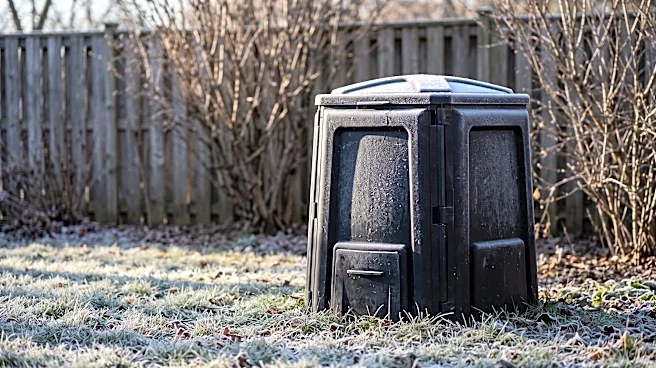
Home compost bins can serve as winter breeding grounds and shelters for the invasive fruit fly, Drosophila suzukii, also known as the spotted-wing drosophila, in temperate climates. A study conducted by researchers at the University of Rennes, France,
monitored experimental composting systems and found that the internal environment of these bins provided protection against lethal cold temperatures. The composters maintained internal temperatures up to four degrees Celsius higher than the outside air, with minimum internal temperatures not falling below two degrees Celsius, even when external temperatures dropped to -3.8 degrees Celsius. This thermal buffering allowed the pest to continue developing immature forms and emerge as adults during the colder months, with emergence peaks observed in December and January, in addition to May.
Why It's Important?
This finding has significant implications for agriculture and pest management, particularly in regions where Drosophila suzukii is a known threat to fruit crops. The ability of home compost bins to harbor and protect these invasive flies during winter means that these pests can persist and recolonize nearby agricultural areas more easily once warmer weather returns. This continuous presence can lead to increased crop damage, economic losses for farmers, and a greater reliance on pesticides. Understanding these overwintering sites is crucial for developing integrated pest management strategies that consider urban and suburban organic waste practices. Without proper management of compost, efforts to control Drosophila suzukii in agricultural fields may be undermined by a constant re-infestation from residential areas.
What's Next?
The research suggests that managing organic waste in home compost bins should integrate strategies for controlling Drosophila suzukii. This could involve educating homeowners about the potential for compost to harbor pests and recommending methods to mitigate this risk, such as ensuring compost piles reach higher temperatures through proper turning and material balance, or covering bins more securely. Further research may explore specific compost management techniques that can disrupt the fly's life cycle during winter. Additionally, agricultural extension services and local governments might need to develop guidelines or programs that address the role of residential composting in regional pest control efforts, potentially including community-wide initiatives to manage organic waste more effectively to reduce pest populations.
Beyond the Headlines
This study highlights the interconnectedness of urban and agricultural ecosystems and the unintended consequences of seemingly benign household practices. It underscores how human activities, even those intended to be environmentally friendly like composting, can inadvertently create conditions favorable for invasive species. The issue raises questions about the broader ecological responsibility of homeowners and the need for a more integrated approach to environmental management that bridges the divide between residential and agricultural concerns. It also points to the complexity of pest control in a changing climate, where milder winters or buffered microclimates can alter the survival rates and distribution of invasive species, demanding adaptive and collaborative solutions across different sectors of society.