



What's Happening?
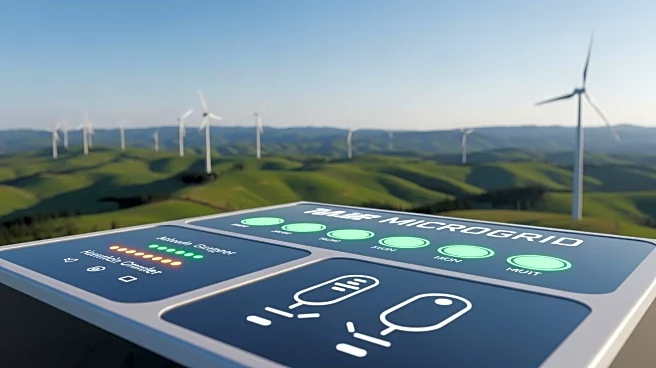
Microgrids are increasingly being adopted by rural and remote communities to achieve greater energy independence and security. These systems, as outlined by experts from ABB, provide localized power generation and distribution, reducing reliance on fossil
fuels and national grid infrastructures. Microgrids integrate renewable energy sources such as solar and wind with advanced energy storage solutions, creating autonomous electrical ecosystems. This shift is driven by the need for long-term energy security, decarbonization, and protection against rising energy costs. The implementation of microgrids allows these communities to generate their own clean, reliable, and sustainable power, with the potential to sell surplus electricity back to utility companies, thus providing economic benefits.
Why It's Important?
The adoption of microgrids in rural areas is significant as it addresses several critical issues. Firstly, it enhances energy security by providing a reliable power source that is less susceptible to outages caused by extreme weather or aging infrastructure. Secondly, it supports environmental goals by reducing dependence on fossil fuels and promoting the use of renewable energy. Economically, microgrids can stimulate local economies by creating jobs in construction, operation, and maintenance. Additionally, they offer communities the opportunity to generate revenue through the sale of excess power. This transition not only supports energy independence but also aligns with broader societal goals of sustainability and resilience.
What's Next?
As microgrids become more prevalent, communities will need to address challenges such as initial capital investment, regulatory hurdles, and ongoing maintenance costs. Collaboration with experienced technology partners like ABB can facilitate the successful deployment and operation of these systems. Future developments may include the integration of more advanced technologies for energy management and cybersecurity measures to protect infrastructure. As electric vehicle ownership increases, microgrids will also need to scale to meet growing energy demands. Continued innovation and investment in microgrid technology will be crucial to expanding their adoption and maximizing their benefits.
Beyond the Headlines
The implementation of microgrids in rural areas could lead to broader cultural and social shifts. By fostering energy independence, communities may experience a renewed sense of autonomy and empowerment. This could encourage further local initiatives aimed at sustainability and self-sufficiency. Additionally, the success of microgrids could serve as a model for other regions, potentially influencing national energy policies and strategies. The focus on renewable energy and local solutions may also inspire greater community engagement and collaboration, strengthening social ties and resilience.