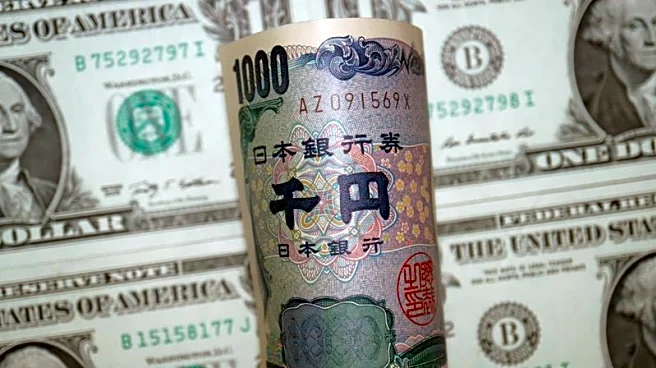




What's Happening?
The Bank of Japan (BOJ) decided to maintain its current interest rates, leading to a slight weakening of the yen. This decision comes amid geopolitical tensions and policy shifts involving Greenland, which have unsettled investors. The U.S. dollar is experiencing
its steepest weekly decline since June, influenced by these geopolitical factors. The BOJ's decision to hold rates steady, despite raising economic and inflation forecasts, reflects its readiness to continue adjusting borrowing costs. Traders are concerned about potential market interventions if the yen weakens further.
Why It's Important?
The BOJ's decision to hold rates steady highlights the challenges central banks face in balancing economic growth with inflation control. The weakening of the yen and the U.S. dollar's decline indicate investor uncertainty amid geopolitical tensions. These developments impact global currency markets, affecting trade and investment flows. The situation underscores the interconnectedness of global economies and the influence of geopolitical events on financial stability.
What's Next?
Market participants will closely watch comments from BOJ Governor Kazuo Ueda for indications of future policy directions. Potential interventions in the currency market may occur if the yen continues to weaken. Investors will also monitor geopolitical developments, particularly U.S. policy shifts, for their impact on currency markets. The BOJ's future rate decisions will be crucial in shaping Japan's economic outlook.