





What's Happening?
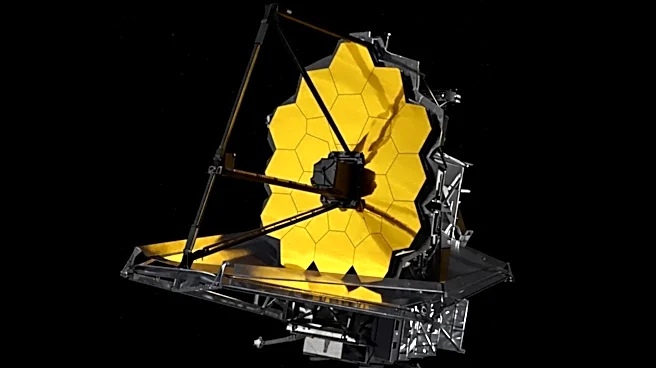
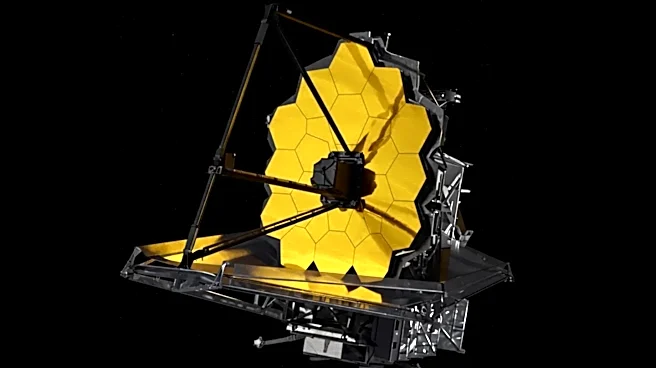
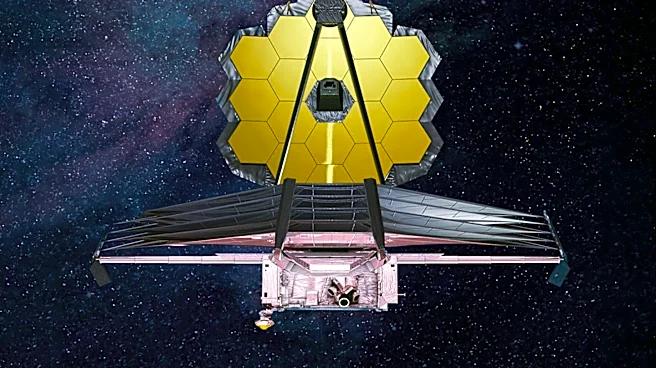
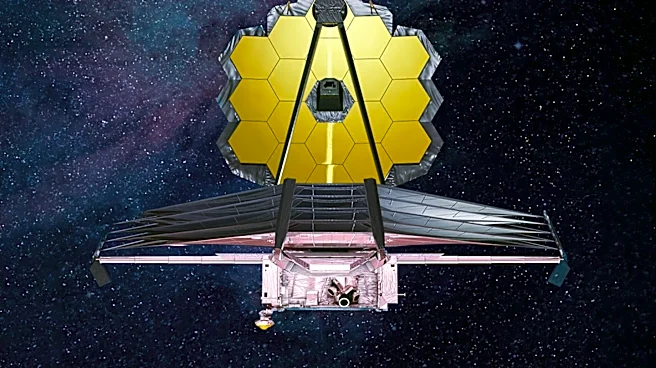
The James Webb Space Telescope (JWST) has observed a metal-poor galaxy, Sextans A, producing iron dust earlier than previously thought possible. This discovery challenges existing models of dust formation in the early universe. Sextans A, located 4.6
million light-years away, contains only a fraction of the heavy elements found in the sun, making it an ideal proxy for studying early cosmic conditions. The findings suggest that dust production in the early universe may have started sooner than theorists assumed, with metallic iron and silicon carbide forming even in environments with extreme metal poverty.
Why It's Important?
This discovery is crucial for understanding the 'dust budget crisis,' where high-redshift galaxies contain more dust than theoretical models can account for. The ability of stars in metal-poor environments to produce dust challenges existing models and suggests that dust formation could have begun much earlier in the universe's history. This has implications for our understanding of galaxy formation and evolution, as dust plays a key role in star formation and the chemical enrichment of galaxies. The findings could lead to revisions in models of the early universe and improve our understanding of cosmic history.
What's Next?
Further studies will likely focus on expanding the sample size of metal-poor galaxies to confirm whether the findings from Sextans A are representative. Researchers may also explore other nearby dwarf galaxies to gather more data on dust production in low-metallicity environments. These efforts could refine models of dust formation and provide a clearer picture of the early universe's conditions. The JWST's capabilities will continue to be leveraged to explore these phenomena, potentially leading to new insights into the processes that shaped the cosmos.