





What's Happening?
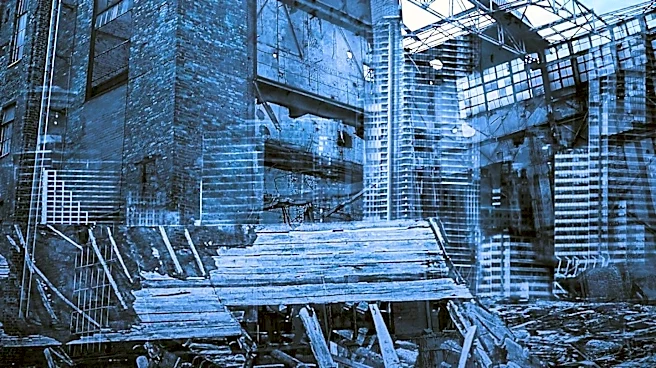
Beijing's Shougang Park, once a major steelmaking facility, has undergone a significant transformation over the past decade. The park's last blast furnace ceased operation in 2010, marking the end of over a century of steel production. Since then, the site
has been redeveloped to integrate preserved industrial structures with modern architecture and green spaces. This revitalization effort has converted the former industrial area into a vibrant urban destination. The park notably hosted the Big Air Shougang, a key venue for the Beijing 2022 Winter Olympics. It has since become a central location for various activities, including exhibitions, commerce, sports, and cultural tourism. Shougang Park now serves as the permanent venue for the China International Fair for Trade in Services and has attracted businesses in emerging sectors such as science fiction and technology.
Why It's Important?
The transformation of Shougang Park is a significant example of urban renewal and industrial repurposing, demonstrating how traditional industrial bases can be revitalized into modern, multi-functional urban centers. This project highlights a broader trend in urban planning where historical industrial sites are preserved and integrated into new developments, offering both economic and cultural benefits. For Beijing, it provides a new hub for international trade, technological innovation, and tourism, contributing to the city's economic diversification and cultural appeal. The success of Shougang Park in attracting major events like the Winter Olympics and the China International Fair for Trade in Services underscores its importance as a model for sustainable urban development. This approach can inspire other cities globally to consider similar transformations for their own aging industrial infrastructures, fostering economic growth and community engagement.
What's Next?
Shougang Park is expected to continue its growth as a prominent urban destination, further solidifying its role as a hub for exhibitions, commerce, sports, and cultural tourism. Its status as the permanent venue for the China International Fair for Trade in Services ensures a consistent flow of international business and trade activities. The park will likely continue to attract more businesses in emerging fields, particularly in science fiction and technology, fostering innovation and economic development. Future developments may include additional cultural attractions, recreational facilities, and commercial enterprises, further enhancing its appeal to both residents and tourists. The ongoing evolution of Shougang Park will serve as a benchmark for urban regeneration projects, potentially influencing future policy decisions regarding industrial heritage sites.
Beyond the Headlines
The transformation of Shougang Park extends beyond mere physical redevelopment; it represents a profound shift in urban identity and economic strategy. By converting a symbol of heavy industry into a center for modern services, technology, and culture, Beijing is redefining its urban landscape and economic priorities. This project addresses the challenge of balancing industrial heritage with contemporary urban needs, offering a model for sustainable development that respects the past while embracing the future. The integration of green spaces and modern architecture within the preserved industrial framework also highlights an evolving environmental consciousness in urban planning. Furthermore, the park's success in attracting diverse businesses and events suggests a strategic move towards a knowledge-based and service-oriented economy, reflecting broader global trends in urban economic restructuring.