









What's Happening?
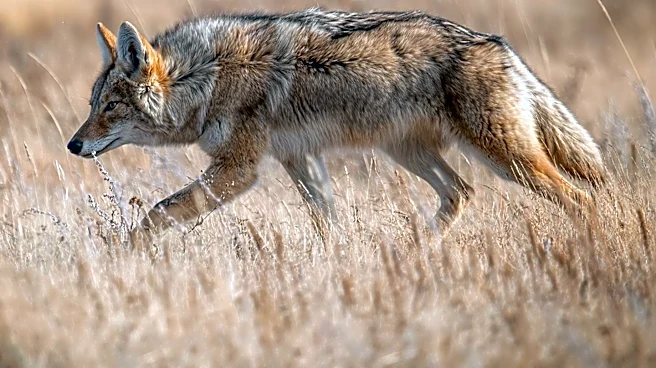
Eastern coyotes, a hybrid species with genetics from coyotes, wolves, and domestic dogs, have successfully spread across all 169 towns and cities in Connecticut. According to officials from the state’s Department of Energy and Environmental Protection
(DEEP), coyotes first appeared in Connecticut in the mid-1950s and have since flourished due to their adaptability and lack of natural predators. Unlike the extinct wolf population in Connecticut, which disappeared around 250 years ago, Eastern coyotes are larger than their western counterparts, with females weighing 33-40 pounds and males 45-55 pounds. Genetic studies indicate they are approximately 64% coyote, 13% gray wolf, 13% eastern wolf, and 10% domestic dog. These highly adaptable animals thrive in both rural and urban environments, posing potential dangers to small pets if habituated to human food sources.
Why It's Important?
The widespread presence of Eastern coyotes across Connecticut signifies a significant ecological shift and presents new challenges for wildlife management and public safety. Their adaptability to human-disturbed environments means increased interactions with residents, particularly concerning pets. This necessitates public education on how to coexist with coyotes, including securing food sources and supervising pets. The hybrid nature of the Eastern coyote also highlights the dynamic evolution of species in response to environmental changes and human impact, offering insights into ecological resilience and adaptation. For state wildlife agencies, managing this pervasive species involves balancing conservation efforts with public safety concerns, especially as coyotes can become bold or aggressive if habituated to humans, leading to attacks on pets and, in rare cases, people.
What's Next?
Connecticut residents are advised to take precautions to minimize conflicts with Eastern coyotes. DEEP officials recommend not allowing pets to run free, keeping cats indoors, and dogs on leashes or under close supervision. Securing garbage and compost, cleaning up bird seed and pet food, and never intentionally feeding coyotes are crucial steps to prevent habituation. If approached by a coyote, individuals should make loud noises and act aggressively to scare them away. DEEP also urges reporting any abnormally bold or rabid coyote behavior to authorities. As coyotes mate in late January and February, and raise pups in April, they may become more aggressive during these periods. Continued public awareness campaigns and responsible pet ownership practices will be essential for managing human-coyote interactions in the state.
Beyond the Headlines
The proliferation of Eastern coyotes in Connecticut offers a compelling case study in how apex predators adapt and fill ecological niches left vacant by historical extinctions, such as that of the wolf. This phenomenon underscores the interconnectedness of ecosystems and the long-term consequences of human activities on wildlife populations. The genetic makeup of the Eastern coyote—a blend of coyote, wolf, and dog—also presents a fascinating biological puzzle, challenging traditional species definitions and highlighting the complexities of hybridization. Ethically, the situation prompts reflection on human responsibility in managing wildlife populations, particularly when human expansion encroaches on natural habitats. The ongoing presence of these adaptable predators requires a shift in human perception and behavior, moving towards coexistence strategies rather than solely focusing on eradication, which has proven ineffective in the past.