


What's Happening?
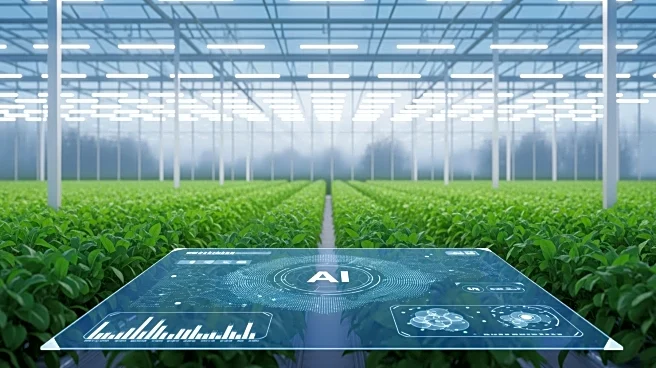
Artificial Intelligence (AI) is playing a transformative role in Indian agriculture, enhancing productivity, sustainability, and resilience. The National Pest Surveillance System, launched in 2024, utilizes AI and Machine Learning (ML) for early detection
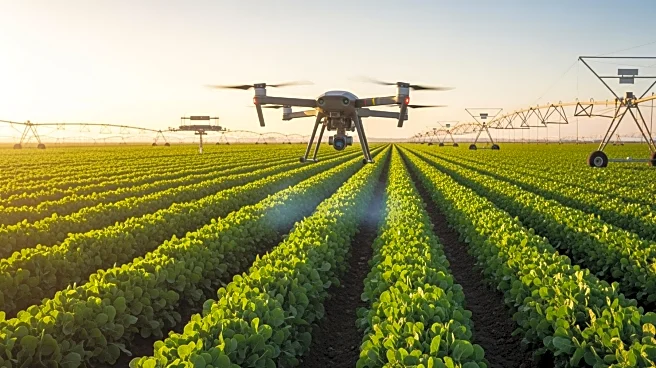
of pest infestations and crop diseases. This system allows farmers to upload images of affected crops for rapid identification and diagnosis. AI-powered tools are also improving farm mechanization efficiency through precision weed removal, early disease detection, automated harvesting, and produce grading. The Indian government is actively promoting AI-driven agricultural innovations through initiatives like the Digital Agriculture Mission and Bharat-VISTAAR, which aim to integrate AI systems with agricultural practices to increase farm productivity and reduce risks.
Why It's Important?
The integration of AI in agriculture is crucial for enhancing the efficiency and sustainability of farming practices in India. By providing real-time data and predictive analytics, AI helps farmers make informed decisions, reducing crop losses and optimizing resource use. This technological advancement supports farmers, particularly in rainfed regions, in managing climate risks and improving crop yields. The government's initiatives to promote AI in agriculture reflect a commitment to sustainable development and inclusive growth, ensuring that technological benefits reach underserved communities. The adoption of AI in agriculture not only boosts productivity but also contributes to environmental conservation by optimizing input use and reducing waste.
What's Next?
The continued expansion of AI-driven agricultural initiatives is expected to further transform the sector. The Indian government plans to scale up AI applications across the agricultural value chain, focusing on precision farming, crop monitoring, and market intelligence. The development of a comprehensive digital public infrastructure, including platforms like AgriStack and the Krishi Decision Support System, will enhance data-driven decision-making and policy implementation. As AI technologies become more accessible, they are likely to drive innovation and efficiency across agriculture and allied sectors, supporting sustainable agricultural transformation and improving the livelihoods of millions of farmers.
Beyond the Headlines
The adoption of AI in agriculture raises important ethical and cultural considerations. Ensuring equitable access to AI technologies and addressing digital literacy gaps are critical to preventing disparities in technology adoption. The focus on human-centric and ethical AI development emphasizes the need for responsible innovation that prioritizes the welfare of farming communities. As AI continues to reshape agriculture, it is essential to balance technological advancement with social and environmental sustainability, fostering a future where technology serves as a tool for inclusive development and improved governance.