


What's Happening?
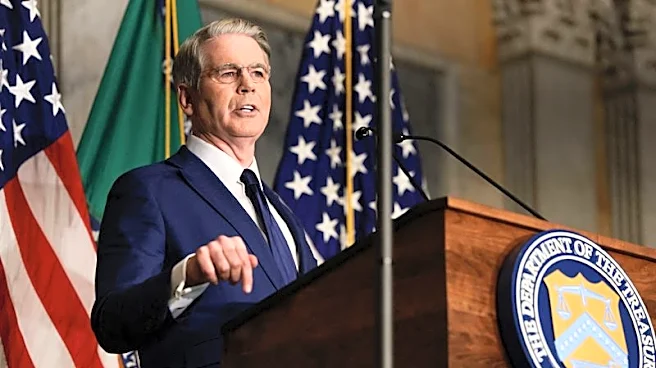
The United States has announced a new wave of sanctions targeting nearly 60 Iranian and Iran-linked entities, individuals, and vessels as part of President Trump's 'Economic D-Day' policy. Treasury Secretary Scott Bessent stated that these measures aim
for the 'economic asphyxiation' of Iran, seeking to sever its economic lifelines. The sanctions target networks accused of supporting Iran's nuclear and missile programs, cyber operations, and oil revenue generation. These entities are spread across various countries, including China, Hong Kong, Singapore, and Europe. The broader sanctions campaign focuses on five key sectors: digital assets, technology, gold, aviation, and shipping. This move follows President Trump's 2018 withdrawal from the 2015 Iran nuclear deal and the subsequent re-imposition of sanctions under a 'maximum pressure' campaign. Iran has rejected these new sanctions, with Economy Minister Ali Madanizadeh asserting that the country has programs to counter American sanctions and that Washington will not achieve its goals. China has also opposed the unilateral sanctions, stating that cooperation between China and Iran is within international law and should not be interfered with.
Why It's Important?
This latest escalation in U.S. sanctions against Iran carries significant implications for global trade and international relations. The 'Economic D-Day' policy, as described by Treasury Secretary Scott Bessent, aims to isolate Iran from the global economy, potentially disrupting its ability to generate revenue and fund its strategic programs. The targeting of entities in countries like China and Singapore highlights the extraterritorial reach of U.S. sanctions and could force other nations to choose between doing business with Iran and maintaining access to the U.S. dollar system. This approach risks creating friction with key trading partners, particularly China, which is a major buyer of Iranian oil. The effectiveness of these sanctions is a subject of debate, as Iran has historically demonstrated resilience in circumventing such measures. The potential for these sanctions to 'blow up the global financial system,' as acknowledged by Bessent, underscores the delicate balance between applying pressure and avoiding broader economic instability. The ongoing sanctions also contribute to the domestic political landscape in the U.S., with the economic consequences of the conflict becoming a central issue.
What's Next?
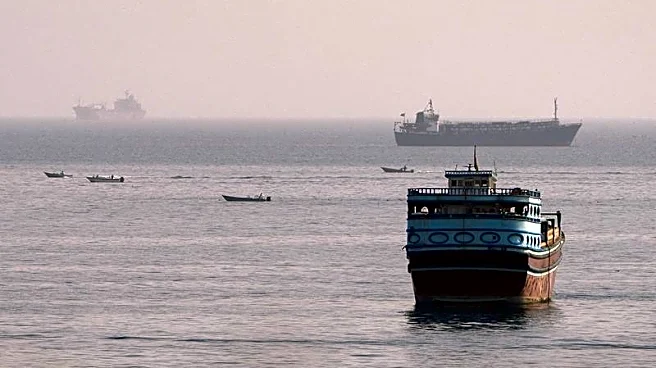
The immediate next steps will likely involve monitoring the compliance of international entities with the new U.S. sanctions. Treasury Secretary Bessent indicated that while the U.S. is offering a 'cure period' for countries and companies to cut ties with Iran, those that do not comply could face severe penalties, including loss of access to the U.S. dollar system. The U.S. administration will need to decide whether to follow through on threats of secondary sanctions against major trading partners like China and Russia, which could lead to significant geopolitical and economic repercussions. Iran is expected to continue its efforts to circumvent the sanctions, potentially through 'shadow fleets' and alternative financial channels. The reactions from other nations, particularly China, will be crucial, as Beijing has already expressed its opposition and vowed to protect its interests. The long-term impact on Iran's economy and its nuclear program remains to be seen, as does the potential for these measures to push Iran towards or away from future negotiations. The ongoing 'maximum pressure' campaign suggests a continued focus on economic coercion as a primary tool of U.S. foreign policy towards Iran.
Beyond the Headlines
The latest U.S. sanctions against Iran delve deeper into the complexities of economic warfare and its ethical and practical limitations. The concept of 'economic asphyxiation' raises questions about the humanitarian impact of broad sanctions on civilian populations, even if the stated goal is to target a regime's strategic capabilities. The historical record of U.S. sanctions against Iran, spanning nearly 50 years, shows a consistent pattern of economic pressure that has yet to fundamentally alter Iran's behavior or bring it to the negotiating table on U.S. terms. This suggests a deeper challenge in using economic tools to achieve political objectives, especially against a nation accustomed to such pressures. Furthermore, the U.S. strategy of threatening secondary sanctions against countries doing business with Iran highlights the increasing weaponization of the global financial system. This approach could inadvertently accelerate de-dollarization efforts by other nations seeking to insulate themselves from U.S. leverage, potentially leading to a more fragmented global economic order. The ongoing struggle also underscores the limits of American power when faced with determined adversaries and the reluctance of other major powers to fully align with U.S. unilateral actions, particularly when those actions carry significant global economic risks.