








What's Happening?
Bahrain's Interior Ministry announced the arrest of 41 individuals connected to the Islamic Revolutionary Guard Corps (IRGC) within the country. These individuals are accused of espionage and supporting Iranian aggression. The arrests come as Bahrain,
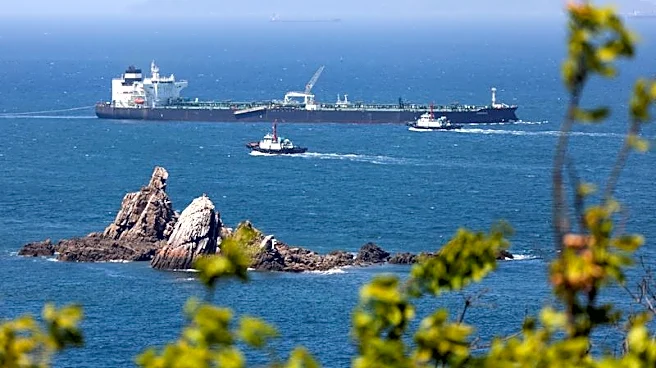
heavily impacted by recent conflicts with Iran, seeks to address threats to its national security. The situation is part of a broader regional tension involving the closure of the Strait of Hormuz, a critical passage for global energy trade. The United States, alongside Gulf allies, is pushing for a UN resolution to halt Iranian attacks in the region, which could lead to sanctions or military action if Iran does not comply.
Why It's Important?
The arrests highlight ongoing security concerns in the Gulf region, particularly regarding Iran's influence and activities. Bahrain's actions reflect broader geopolitical dynamics, where regional powers like Saudi Arabia and the UAE, along with the U.S., are involved in strategic maneuvers to counter Iran's influence. The situation affects global energy markets, as the Strait of Hormuz is a vital route for oil shipments. Any disruption could impact oil prices and global economic stability. The arrests also underscore the fragile nature of regional peace and the potential for escalation if diplomatic solutions are not found.
What's Next?
The international community, particularly the UN Security Council, will continue discussions on the proposed resolution against Iran. Bahrain and its allies may seek further diplomatic and possibly military measures to ensure regional stability. The outcome of these discussions could influence future relations between Iran and Gulf states, as well as impact global energy markets. Bahrain's internal security measures will likely intensify to prevent further IRGC-related activities.