
What's Happening?
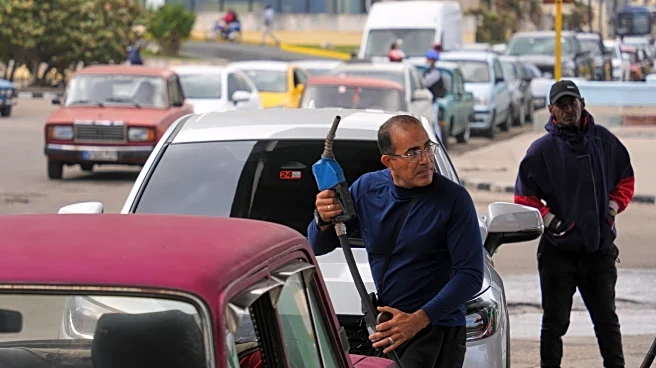
Caribbean correspondent Dánica Coto recently returned to Cuba after a three-year absence, observing significant changes in the country's landscape and daily life. The economic situation in Cuba has deteriorated, with visible signs of hardship such as garbage
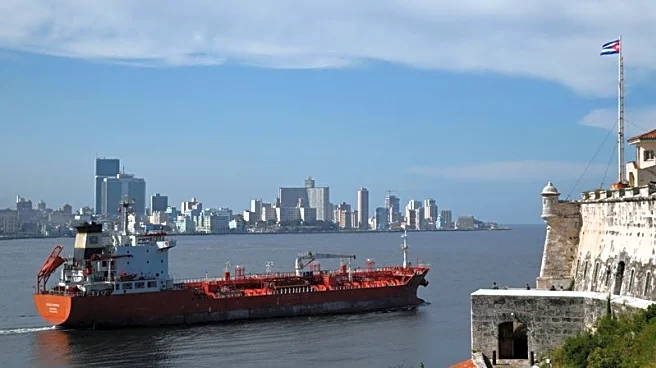
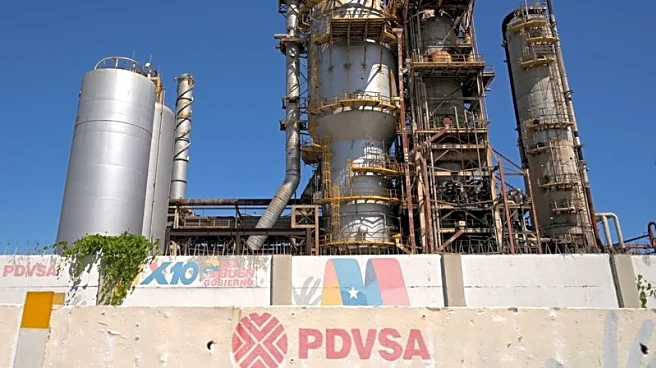
accumulation, crumbling infrastructure, and frequent power outages. The scarcity of fuel and natural gas has forced many Cubans to resort to using firewood and charcoal for cooking. The U.S. attack on Venezuela, Cuba's key ally, has exacerbated these issues, leading to a potential crisis as oil shipments from Venezuela and Mexico are disrupted. The U.S. government, under President Trump, has imposed tariffs on goods from countries supplying oil to Cuba, further straining the island's economy.
Why It's Important?
The situation in Cuba highlights the broader geopolitical tensions between the U.S. and its adversaries in Latin America. The economic hardships faced by Cubans are a direct consequence of U.S. foreign policy aimed at isolating the Cuban government. The Trump administration's actions, including designating Cuba as a state sponsor of terrorism, are intended to pressure the Cuban government into political change. However, these measures also risk deepening the humanitarian crisis on the island, affecting ordinary Cubans who are already struggling with shortages of basic goods and services. The resilience of the Cuban people, who have endured similar hardships during the 'Special Period' in the 1990s, is being tested once again.
What's Next?
The future for Cuba remains uncertain as the U.S. continues to increase pressure on the Cuban government. The rhetoric from U.S. officials suggests a desire for regime change, but the Cuban government has shown no signs of altering its stance. As the economic situation worsens, Cubans are finding ways to adapt, such as installing solar panels and growing their own food. The potential for a popular uprising, as hoped for by the U.S., seems unlikely given the Cuban people's historical resilience and skepticism towards external influence. The situation will require careful monitoring as both the U.S. and Cuban governments navigate this tense period.
Beyond the Headlines
The ongoing economic challenges in Cuba also raise questions about the ethical implications of using economic sanctions as a tool for political change. While intended to pressure governments, such measures often disproportionately affect the most vulnerable populations. The Cuban case serves as a reminder of the complex interplay between international politics and human rights, highlighting the need for policies that consider the humanitarian impact on civilian populations. Additionally, the situation underscores the importance of regional alliances and the role of countries like Venezuela and Mexico in supporting Cuba's economy.