

What's Happening?
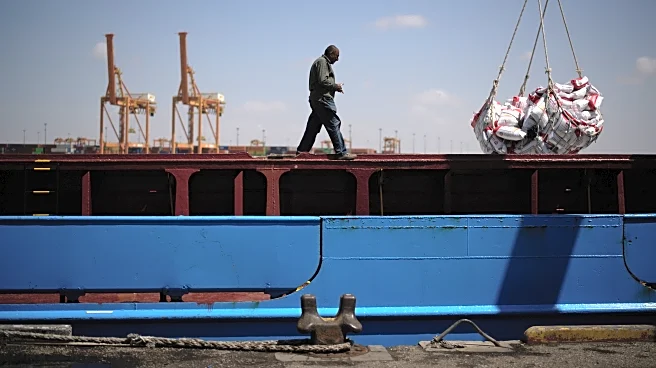
Iran has strengthened its control over the Strait of Hormuz following a month of conflict, significantly impacting global oil markets. The number of vessels traversing the strait has dropped from an average of 135 per day to just six, with 80% of these
being Iranian or from allied countries. Iran's control has led to a 60% increase in Brent crude prices, as countries like India and Turkey seek Tehran's approval for passage. Despite the conflict, Iran's oil exports have increased, primarily to China. The U.S. has made concessions, waiving some sanctions on Iranian oil to stabilize prices.
Why It's Important?
The Strait of Hormuz is a critical chokepoint for global oil supply, and Iran's control over it gives Tehran significant leverage in international diplomacy and energy markets. The disruption has forced other Gulf producers to seek alternative routes, affecting global oil supply chains. The situation underscores the vulnerability of global energy markets to geopolitical tensions and highlights the strategic importance of the strait. The U.S. and its allies face challenges in countering Iran's influence without escalating the conflict further.
What's Next?
Iran's proposed toll system for ships passing through the strait could formalize its control, potentially leading to further geopolitical tensions. The international community may seek diplomatic solutions to ensure the free flow of oil through the strait. The ongoing conflict and Iran's strategic maneuvers could lead to long-term shifts in global energy policies and alliances. Stakeholders in the oil industry will need to adapt to the new realities of the market, considering the potential for continued disruptions.
Beyond the Headlines
Iran's actions in the Strait of Hormuz highlight the complex interplay between international law and geopolitical power. The situation raises questions about the enforcement of maritime laws and the role of international bodies in resolving such conflicts. The economic impact on countries reliant on oil imports from the region could lead to shifts in energy policies and increased investment in alternative energy sources. The conflict also underscores the need for robust international frameworks to manage critical global trade routes.