








What's Happening?
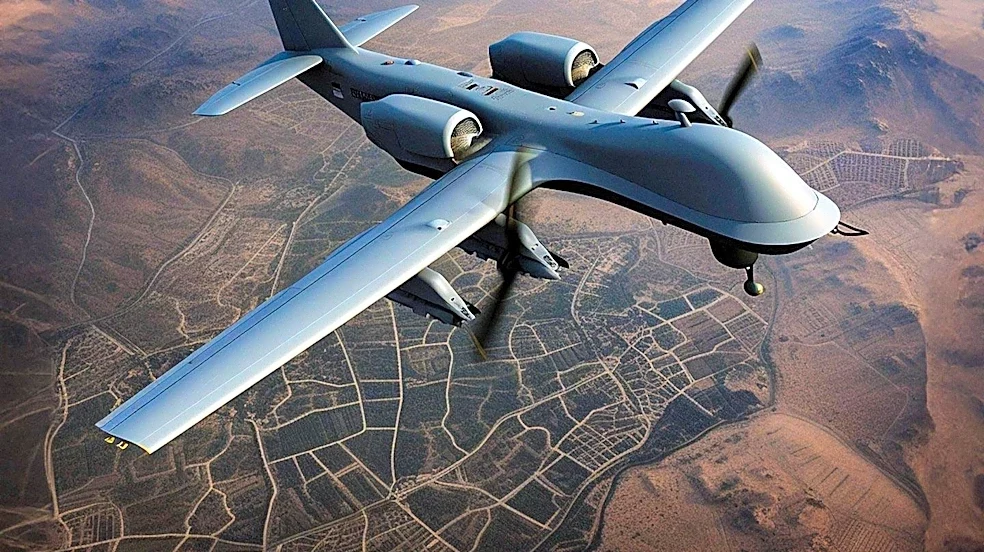
The Arizona National Guard is set to become the first state to establish a unit equipped with the Gray Eagle 25M unmanned aircraft system (UAS). General Atomics Aeronautical Systems, the manufacturer, announced that the Arizona Guard will receive eight
Gray Eagle 25Ms by September 2027, with an additional four by the end of 2029. Patrick Shortsleeve, Vice President of Defense Department strategic development at General Atomics, highlighted the aircraft's role as an integral part of the Army Aviation team, designed to work with advanced autonomy and manned rotary-wing systems to counter threats. The Gray Eagle 25M, which first flew in December 2023, is a modernized version of the Gray Eagle UAS, featuring an open architecture design, advanced datalinks, and an upgraded propulsion system. These enhancements provide improved modifiability, resistance to electronic threats, greater payload capacity, and extended flight time.
Why It's Important?
This deployment marks a significant upgrade in the capabilities of the U.S. National Guard, particularly for the 40th Infantry Division, which includes the Arizona Guard. The Gray Eagle 25M's advanced features, such as its open architecture and enhanced datalinks, will allow for greater interoperability and adaptability in various mission scenarios, from intelligence gathering to supporting fires and maneuver operations. This move underscores the Army's commitment to modernizing its unmanned systems and integrating them more deeply into its operational structure. For the defense industry, it signifies continued investment in advanced drone technology and the importance of modular, adaptable systems. The National Guard's goal of creating a UAS company in each of its eight infantry divisions indicates a broader strategic shift towards leveraging unmanned aerial capabilities across state-level military operations, enhancing national security and response readiness.
What's Next?
The Arizona National Guard will begin integrating the Gray Eagle 25M into its operations, with deliveries scheduled through 2029. This will involve extensive training for personnel to operate and maintain the new UAS. As more units are fielded, the National Guard will work towards its goal of establishing a UAS company in each of its eight infantry divisions, with Congress having already funded three such units. Once fully operational, these Gray Eagle 25M units will be capable of deploying in support of global missions for Combatant Command (COCOM) commanders and defending against threats in the Western Hemisphere. The success of the Arizona Guard's integration will likely serve as a model for other states and potentially influence future procurement decisions and strategic deployments of advanced unmanned systems within the U.S. military.
Beyond the Headlines
The fielding of the Gray Eagle 25M drone by the National Guard has deeper implications for military doctrine and the future of warfare. The emphasis on an 'open architecture design' suggests a move towards more flexible and adaptable military hardware, allowing for quicker integration of new technologies and countermeasures against evolving threats. This approach could foster greater innovation within the defense sector and reduce reliance on proprietary systems. Furthermore, the increased autonomy and extended operational capabilities of these drones raise ethical considerations regarding the role of unmanned systems in combat and surveillance. The ability to deploy these advanced assets for both global missions and homeland defense highlights a growing reliance on sophisticated aerial intelligence and strike capabilities, potentially reshaping the nature of military engagement and the balance between human and machine decision-making in conflict zones.