
What's Happening?
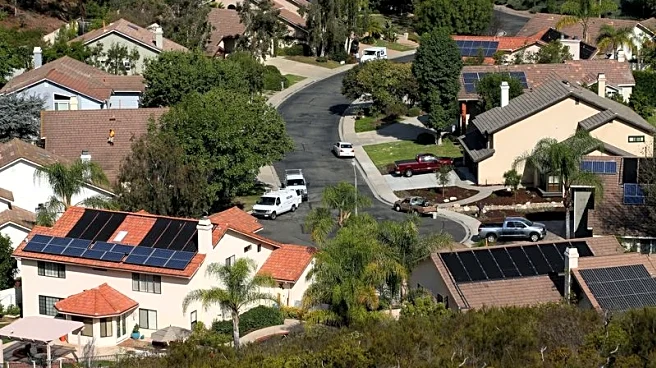
A recent report by Bankrate reveals that nearly 75% of Americans find homeownership unaffordable, with young people particularly affected. In Utah, the income required to afford a three-bedroom home has
risen to nearly $169,000 annually, a figure deemed 'ridiculous' by prospective buyers like Jackson Hilker. Dejan Eskic, Chief Economist for the Salt Lake Board of Realtors, notes that the gap between income and home prices is widening, with monthly mortgage payments doubling from $1,500 in 2021 to $3,500 today. Despite these challenges, real estate experts suggest that homeownership is still possible with careful planning. They advise focusing on budget management rather than waiting for interest rates to drop to pandemic lows, which are unlikely to return.
Why It's Important?
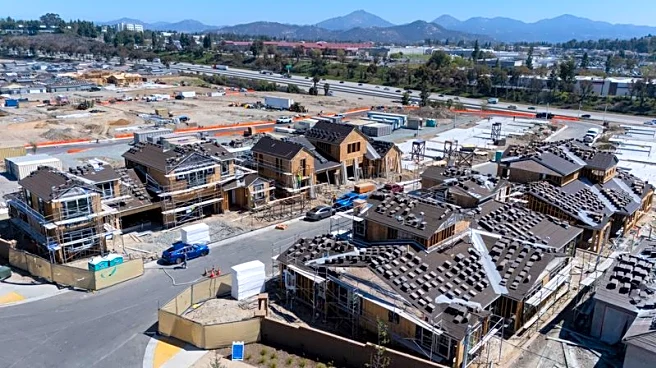
The increasing difficulty in affording homes has significant implications for the U.S. housing market and economic stability. As homeownership becomes less attainable, it could exacerbate wealth inequality and limit economic mobility, particularly for younger generations. The rising costs may also impact consumer spending and savings, as more income is diverted to housing expenses. This situation underscores the need for policy interventions to address housing affordability and support first-time buyers. The potential increase in housing supply in 2026 may offer some relief, but without significant changes in income levels or housing policies, the affordability crisis is likely to persist.
What's Next?
Looking ahead, the housing market in Utah and similar regions may see a slight increase in available homes, potentially easing competition among buyers. However, experts like Braxton Mora emphasize the importance of realistic financial planning over waiting for favorable interest rates. Prospective homeowners are encouraged to assess their long-term financial goals and consider how current market conditions align with their ability to purchase a home. Policymakers may also face increased pressure to implement measures that address the affordability gap and support sustainable homeownership.