






What's Happening?
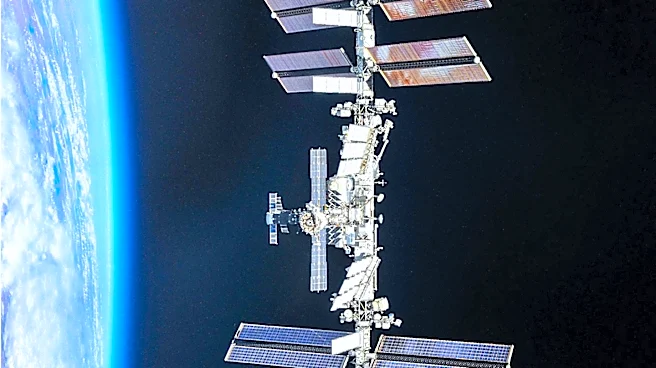
NASA's CLARREO Pathfinder mission has successfully achieved 'first light,' marking a significant milestone in its mission to enhance Earth observation. The CLARREO Pathfinder, a hyperspectral imaging spectrometer, is now operational aboard the International
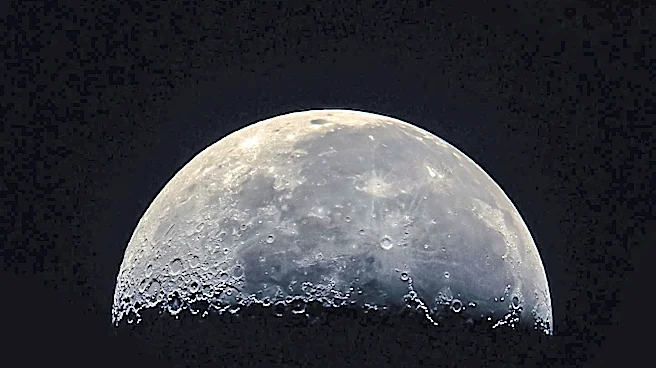
Space Station. It has begun capturing detailed spectral data, which is crucial for improving the accuracy of climate models and satellite sensor calibration. The instrument measures sunlight reflected by Earth and the Moon with unprecedented precision, offering data with 5 to 10 times lower uncertainty than existing sensors. The first measurements were taken over the western coast of Canada, capturing a diverse range of features including ocean, land, and clouds. This achievement validates years of preparation and testing, and the mission is now entering its commissioning phase, with further science and instrument tests scheduled in the coming months.
Why It's Important?
The successful deployment of the CLARREO Pathfinder represents a leap forward in Earth observation technology. By providing highly accurate calibration standards, it enhances the quality of data collected by satellite sensors used in both government and commercial applications. This advancement is critical for improving climate models, which rely on precise data to predict and understand climate change impacts. The mission's ability to measure reflected sunlight with high accuracy will aid in better understanding atmospheric particles, cloud dynamics, and land surface properties. This data is invaluable for scientists and policymakers working on climate change mitigation and adaptation strategies, as it provides a more reliable basis for decision-making.
What's Next?
The CLARREO Pathfinder mission will continue its commissioning phase, during which it will undergo extensive science and instrument tests. These tests are designed to ensure the instrument's performance meets the high standards required for its mission objectives. As the mission progresses, it is expected to provide a wealth of data that will be used to refine climate models and improve the calibration of other satellite sensors. The insights gained from this mission will likely influence future Earth observation missions and contribute to a deeper understanding of our planet's climate system.