






What's Happening?
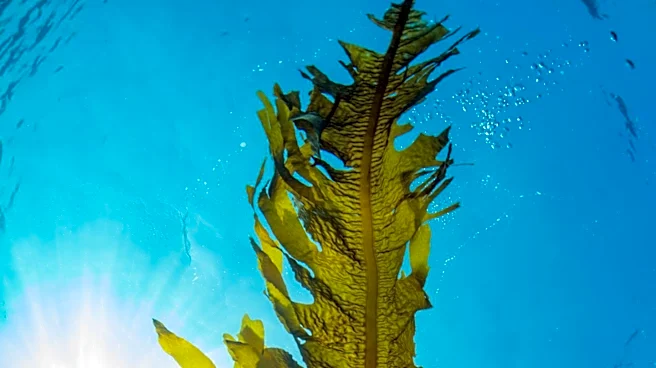
Researchers from institutions including the University of Texas McGovern Medical School at Houston have identified a lipid extract from Patagonian giant kelp that demonstrates protective effects on brain cells against metabolic disruptions associated
with Alzheimer's disease. The study focused on *Macrocystis pyrifera*, a giant kelp found in southern Patagonia, and specifically examined lipid extracts from its fronds, stipes, and holdfasts. Laboratory experiments, conducted on primary mouse hippocampal neurons and acute hippocampal slices, revealed that a holdfast-derived lipid extract (LEFH) significantly restored neuronal viability and glucose metabolism when exposed to amyloid-beta 1–42, a peptide linked to Alzheimer's pathology. Amyloid-beta typically reduces neuronal viability by approximately 40% and glucose uptake by about 50%; however, LEFH maintained these functions close to normal levels. The extract also limited the decline in glycolysis and preserved activity in the pentose phosphate pathway, crucial for glucose utilization and cellular defense. Additionally, LEFH increased intracellular glutathione and glutathione peroxidase activity, and improved cellular energy regulation by increasing the ATP/ADP ratio and gene expression for PGC-1α and GLUT4.
Why It's Important?
This research is important because it highlights marine compounds, specifically lipids from Patagonian kelp, as a potential source for future neuroprotective treatments against Alzheimer's disease. Alzheimer's is a devastating neurodegenerative condition with limited effective treatments, and the discovery of natural compounds that can mitigate its cellular effects offers a new avenue for drug development. The ability of LEFH to protect neuronal glucose metabolism and energy balance is particularly significant, as metabolic dysfunction is a key feature of Alzheimer's pathology. By restoring these vital cellular processes, LEFH could potentially slow or prevent the progression of neuronal damage. This could lead to the development of novel therapies that target the metabolic aspects of the disease, offering hope for improved outcomes for patients. The involvement of U.S. research institutions like the University of Texas McGovern Medical School at Houston underscores the global collaborative effort in addressing this complex health challenge.
What's Next?
While the initial findings are promising, researchers emphasize that further steps are necessary before any therapeutic relevance can be established. The immediate next steps include comprehensive chemical characterization of the holdfast-derived lipid extract (LEFH) to identify its active components. Following this, detailed mechanistic studies will be required to fully understand how LEFH exerts its protective effects at a molecular level. Chronic animal experiments will then be crucial to assess its long-term efficacy and safety in living organisms. Ultimately, if these preclinical studies yield positive results, human clinical trials will be needed to determine its therapeutic potential and safety in patients with Alzheimer's disease. These stages are critical for translating laboratory findings into viable treatments, and will involve significant investment in research and development.
Beyond the Headlines
Beyond the immediate therapeutic implications, this study opens broader discussions about the potential of marine biodiversity as a source of novel pharmaceutical compounds. The oceans, particularly underexplored regions like Patagonia, may harbor a wealth of natural substances with significant biomedical applications. This research underscores the importance of bioprospecting in marine environments, which could lead to discoveries not only for Alzheimer's but also for other complex diseases. Ethically, the sustainable harvesting of such marine resources will be a critical consideration to ensure ecological balance. Culturally, it may also foster a greater appreciation for marine ecosystems and their potential contributions to human health. The long-term shift could be towards integrating natural product discovery more prominently into pharmaceutical research, moving beyond synthetic compounds to explore the vast chemical diversity found in nature.