



What's Happening?
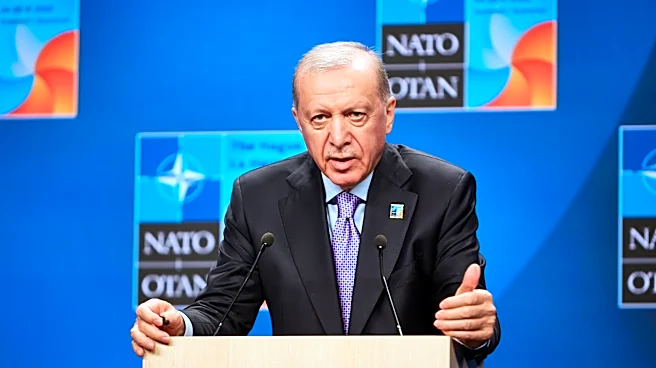
Turkish President Recep Tayyip Erdoğan met with Bolivian President Rodrigo Paz Pereira in Istanbul on November 14, 2026, to explore opportunities for strengthening bilateral relations, expanding trade, and attracting investment. The meeting, held at the Presidential
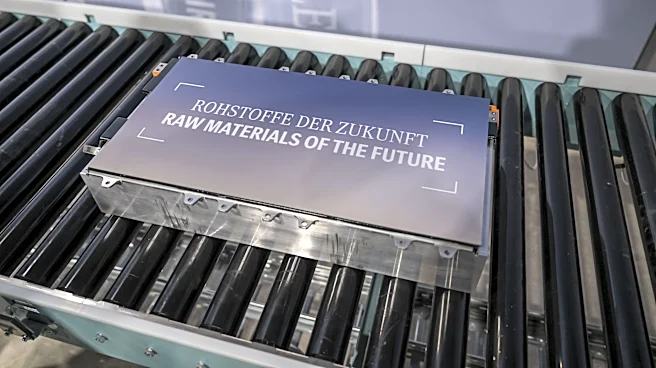
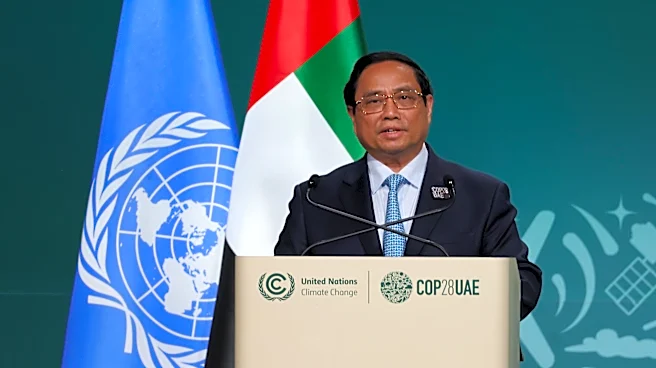
Dolmabahçe Office, included private discussions followed by broader talks involving officials from both nations. President Paz Pereira's visit to Türkiye also encompassed participation in the U.N. Climate Change Conference (COP31) in Antalya, business meetings, and tours of major Turkish defense companies. Both leaders emphasized expanding economic cooperation, with a particular focus on increasing bilateral trade, which reached approximately $820 million in 2025, with a target to exceed $1 billion. Key areas identified for cooperation include energy, mining, infrastructure, agriculture, agricultural technology, tourism, manufacturing, and defense industries. Bolivia's significant lithium and mineral reserves present opportunities for Turkish companies, while Türkiye offers expertise in industrial development and access to international markets.
Why It's Important?
This meeting signifies a strategic effort by both Türkiye and Bolivia to diversify their international partnerships and foster economic growth. For Bolivia, under President Paz Pereira's administration, which began in November 2025, attracting foreign investment and stabilizing its economy are central priorities. His economic agenda, focused on private-sector investment and institutional reform, seeks to strengthen investor confidence and improve legal frameworks for investment in sectors like mining and hydrocarbons. Closer engagement with Türkiye could provide Bolivia with new sources of investment, industrial expertise, and access to European and Asian markets. For Türkiye, expanding its commercial and political ties with Latin American countries like Bolivia offers new avenues for trade, investment, and strategic partnerships, particularly in defense and resource-rich sectors. The emphasis on defense cooperation, highlighted by the presence of Türkiye's National Defense Minister and Presidency of Defense Industries President, indicates a potential for significant collaboration in military technology and procurement.
What's Next?
Both nations aim to continue discussions and implement agreements to achieve their trade target of over $1 billion. The focus will be on facilitating private-sector investment and business partnerships in the identified key sectors. Bolivia's ongoing efforts to secure international support for environmentally sustainable development, as evidenced by its initial green financing package with Germany's KfW, suggest a continued push for climate cooperation. Future engagements are likely to involve further technical partnerships and mechanisms for revenue generation through forest conservation. The visits by the Bolivian delegation to Turkish defense companies indicate potential for concrete agreements in military technology and modernization. The broader efforts to establish stronger political and commercial ties are expected to lead to more structured agreements and increased bilateral exchanges in the coming years.
Beyond the Headlines
The engagement between Türkiye and Bolivia reflects a broader trend of emerging economies seeking to forge new alliances and diversify their economic and strategic relationships beyond traditional partners. For Bolivia, this move away from nearly two decades of left-wing political dominance under the Movement for Socialism (MAS) towards an agenda of 'capitalism for all' signals a significant shift in its economic and foreign policy orientation. The emphasis on green financing and sustainable development also highlights the growing importance of environmental considerations in international economic partnerships. This collaboration could serve as a model for other developing nations looking to leverage their natural resources for sustainable growth while attracting foreign investment and technological expertise. The deepening of defense ties also suggests a strategic alignment that could have implications for regional security and influence.