




What's Happening?
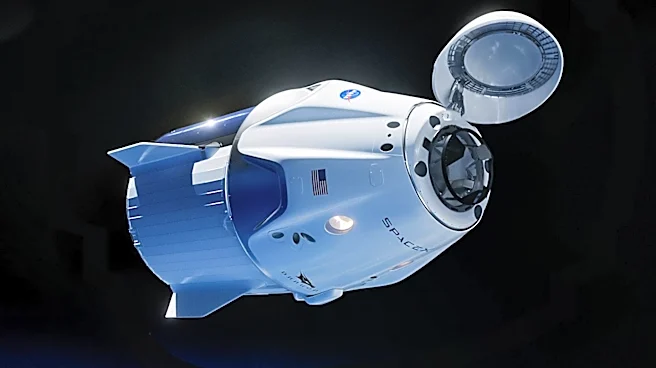
Expedition 75 astronauts aboard the International Space Station (ISS) are actively preparing a SpaceX Dragon cargo spacecraft for its upcoming departure. This involves packing a variety of payloads, including bacterial DNA and 3D-printed blood vessels,
for return to Earth for analysis. The Dragon spacecraft delivered over 6,300 pounds of science, supplies, and hardware on October 15. NASA flight engineers Anil Menon and Jessica Watkins are leading the packing efforts, ensuring critical research samples are preserved in portable freezers and incubators. Additionally, Menon and CSA flight engineer Joshua Kutryk are meticulously arranging cargo to ensure proper mass distribution and balance for a safe Earth reentry. Other activities include NASA flight engineer Luke Delaney setting up the Life Science Glovebox for a space botany investigation and cleaning spacesuits used during recent spacewalks. In the Roscosmos segment, station commander Pyotr Dubrov is studying semiconductor crystal manufacturing in microgravity, while Anna Kikina and Sergey Teteryatnikov are engaged in transcribing audio reports and managing inventory.
Why It's Important?
The meticulous preparation of the SpaceX Dragon for its return to Earth is crucial for advancing scientific research conducted on the ISS. The samples being returned, such as bacterial DNA and 3D-printed blood vessels, hold potential for breakthroughs in various fields, including medicine and biotechnology. Understanding how plants respond to disease in microgravity, as explored in the MVP-Plant-02 study, is vital for developing sustainable life support systems for future long-duration space missions, including those to the Moon and Mars. The ongoing research into manufacturing high-purity semiconductor crystals in microgravity could lead to the development of advanced materials with superior properties not achievable on Earth, impacting industries from electronics to aerospace. The continuous maintenance of spacesuits and inventory management ensures the safety and operational efficiency of the ISS, directly supporting the long-term presence of humans in space and the continuity of scientific endeavors.
What's Next?
The packing of the SpaceX Dragon cargo spacecraft will be finalized the day before its departure, with the transfer of critical research samples into portable freezers and incubators. Following its departure, the Dragon will perform a safe Earth reentry and splashdown in the Pacific Ocean, allowing scientists to retrieve and analyze the returned samples. The space botany investigation, MVP-Plant-02, will proceed in the Life Science Glovebox, providing further insights into plant health in microgravity. The ongoing research in semiconductor crystal manufacturing and the use of super intelligence tools for crew audio reports will continue to yield data for future advancements. These activities are part of NASA's broader mission to explore the unknown, innovate for humanity's benefit, and inspire through discovery, with a focus on returning American astronauts to the Moon and establishing a long-term presence in space.
Beyond the Headlines
The continuous operations aboard the ISS, including cargo transfers and scientific experiments, underscore the collaborative nature of international space exploration. The diverse range of research, from biological samples to material science, highlights the ISS as a unique microgravity laboratory that enables discoveries impossible on Earth. The development of advanced materials in space could lead to new technologies and products with significant terrestrial applications, potentially revolutionizing various industries. Furthermore, the focus on sustaining human life in space through studies like space agriculture is not just about future missions but also about understanding fundamental biological processes that could have implications for human health and well-being on Earth. The routine maintenance and logistical challenges of operating an orbital outpost also drive innovation in engineering and resource management, with potential spillover benefits for terrestrial infrastructure and sustainability efforts.