
What's Happening?
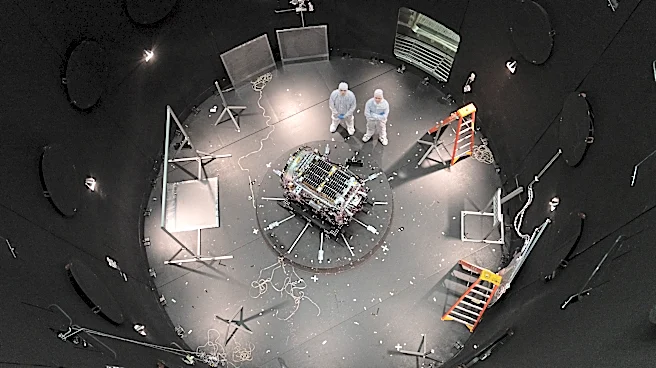
NASA's mission to rescue the Neil Gehrels Swift Observatory is facing challenges as the LINK spacecraft, built by Katalyst Space, experiences attitude control issues. Two of LINK's three reaction wheels
are not operable, causing a multi-axis spin and sporadic communications. Despite these issues, LINK remains in contact with its controllers, and its other major subsystems are functioning as expected. The team is using electric propulsion thrusters to stabilize the spacecraft and plans to update its guidance system once stability is restored. LINK was launched to prevent Swift from re-entering Earth's atmosphere, with a limited timeframe to complete the mission.
Why It's Important?
This mission is crucial for extending the operational life of the Swift Observatory, which plays a vital role in astronomical research. The challenges faced by LINK highlight the complexities and risks associated with space missions, particularly those involving spacecraft rescue operations. Successfully stabilizing LINK and completing the mission would demonstrate the capabilities of Katalyst Space and contribute to advancements in space technology. The mission's outcome could influence future rescue missions and the development of technologies for spacecraft maintenance and repair. The situation underscores the importance of robust engineering and contingency planning in space exploration.