
What's Happening?
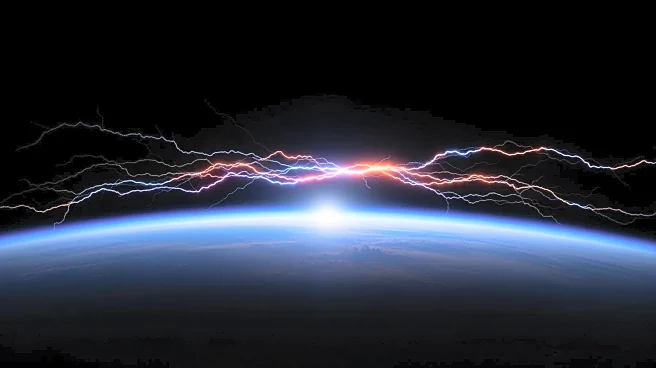
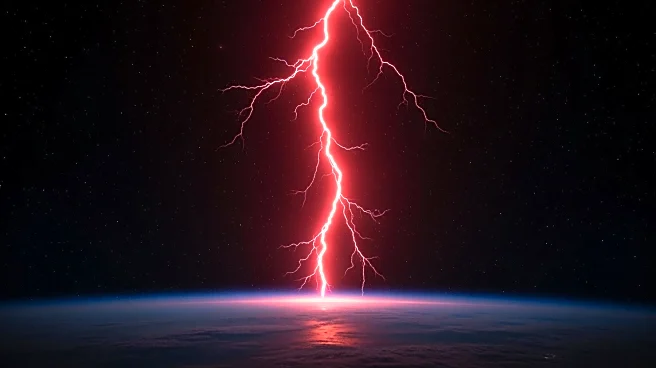
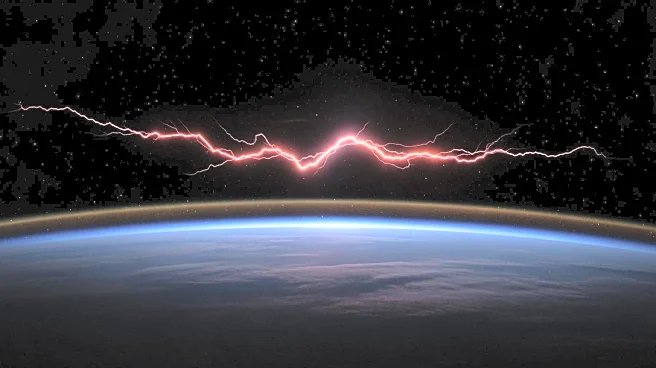
NASA has released new findings from the International Space Station (ISS) regarding transient luminous events (TLEs) such as red sprites and blue jets, which occur high above thunderstorms. These phenomena, previously elusive to systematic study, are
now being captured by the Atmosphere–Space Interactions Monitor (ASIM) on the ISS. ASIM's high-speed cameras and sensors have been documenting these events, which can affect radio transmissions and aircraft safety by altering the ionosphere's charge. The ISS's unique vantage point allows for detailed observation of these brief, high-altitude electrical discharges, contributing to a better understanding of their impact on atmospheric chemistry and communication systems.
Why It's Important?
The study of TLEs is crucial as they can disrupt radio communications and affect aviation safety. By understanding these phenomena, scientists can improve models that predict their occurrence and impact. This research is significant for industries reliant on radio communications, such as aviation and maritime operations, as it helps in developing guidelines to mitigate potential disruptions. Additionally, the findings contribute to climate science by providing insights into how these events influence atmospheric chemistry, potentially affecting climate models and predictions.
What's Next?
With the ISS expected to continue operations through the decade, ongoing observations will expand the library of storm-related data. Future advancements in detection technology, such as next-generation detectors and CubeSats, are anticipated to enhance real-time monitoring and alert systems for weather agencies. These developments aim to improve predictive capabilities and safety measures for industries affected by atmospheric electrical phenomena.