
What's Happening?
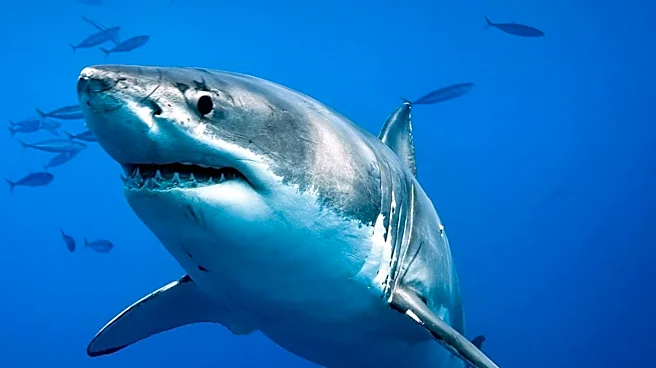
Scientists have rediscovered vertebrae of the prehistoric shark Otodus megalodon, previously thought lost, in a museum collection. The study, based on 11-million-year-old vertebrae found in Denmark, confirms that these sharks could grow over 24 meters
(79 feet) long. The rediscovery allows researchers to better understand the size and growth patterns of this ancient predator. The vertebrae, which are rare due to the cartilaginous nature of shark skeletons, provide crucial insights into the biology of one of the largest predators to have ever lived.
Why It's Important?
The rediscovery of Megalodon fossils offers valuable information about the biology and ecology of this extinct species, contributing to our understanding of marine life evolution. The findings highlight the importance of museum collections in preserving scientific heritage and the potential for new discoveries from existing specimens. This research also underscores the challenges faced by museums in maintaining and cataloging vast collections, emphasizing the need for careful preservation and documentation to prevent the loss of valuable scientific data.