


What's Happening?
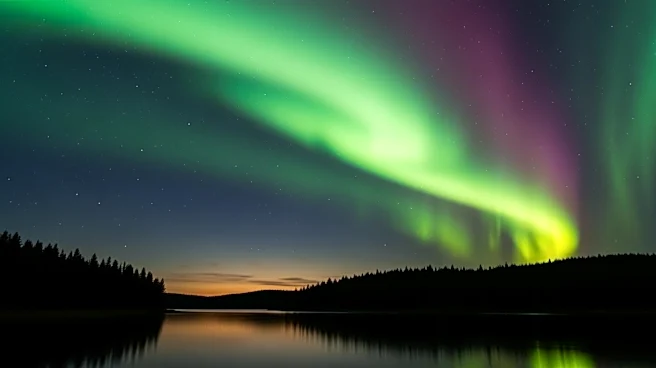
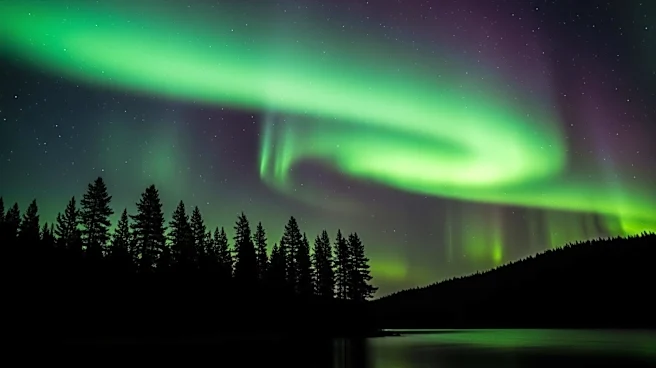
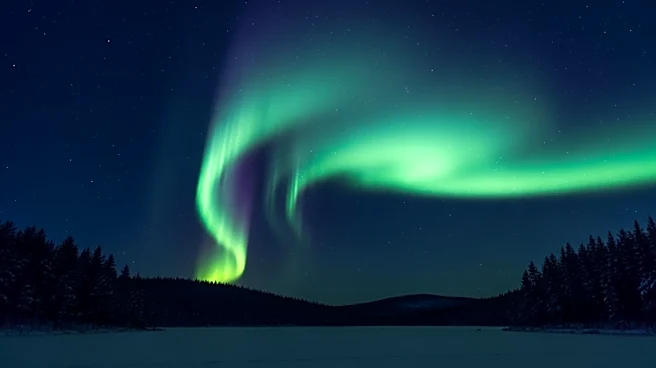
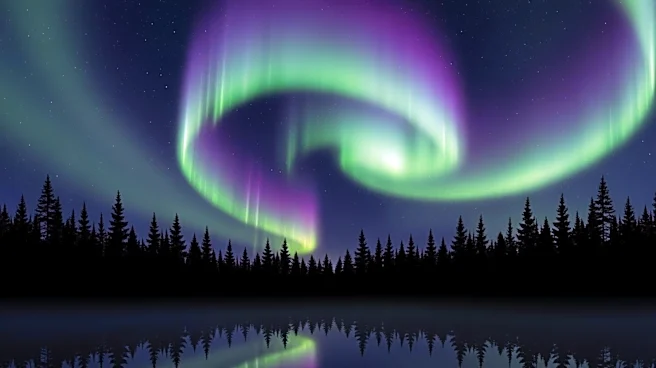
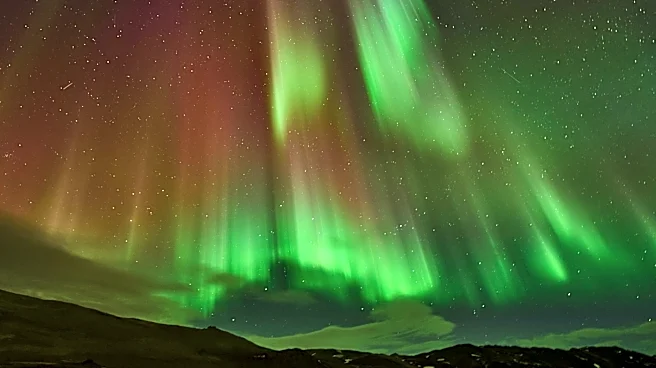
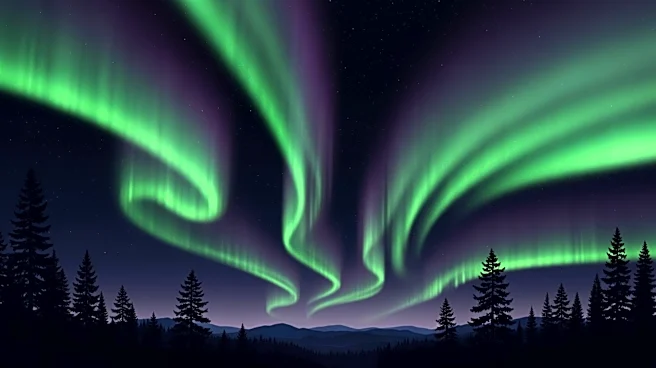
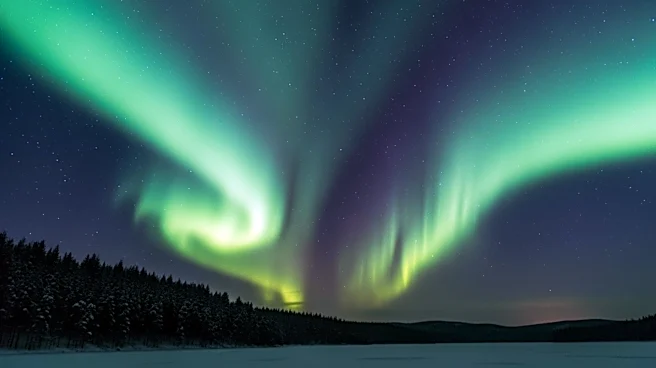
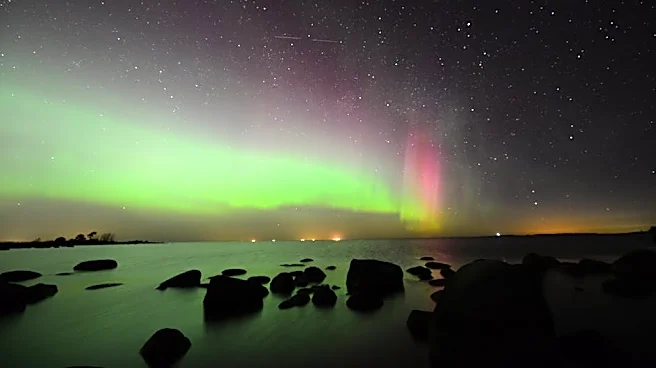
A rare celestial event is set to illuminate the skies across parts of the United States, as the aurora borealis, commonly known as the northern lights, may be visible far beyond its usual northern boundaries. This phenomenon is driven by a geomagnetic
storm, a disturbance in Earth's magnetic field caused by charged particles from the sun. Typically seen in regions like Alaska and northern Canada, the northern lights are expected to extend into parts of the continental U.S. due to heightened solar activity. The best chances for viewing are in the northern tier of the U.S., including states like Alaska, Washington, and Minnesota, with potential visibility extending as far south as Oregon and Ohio if the storm intensifies.
Why It's Important?
This event is significant as it offers a rare opportunity for millions of Americans to witness the northern lights without traveling to Arctic regions. The geomagnetic storm conditions, driven by a high-speed stream of solar wind from a coronal hole on the sun, are strong enough to expand the aurora's reach. Such events highlight the dynamic nature of space weather and its impact on Earth. For many, this is a chance to experience one of nature's most striking displays, which can inspire interest in astronomy and the sciences. Additionally, it underscores the importance of monitoring solar activity and its potential effects on Earth's magnetic field.
What's Next?
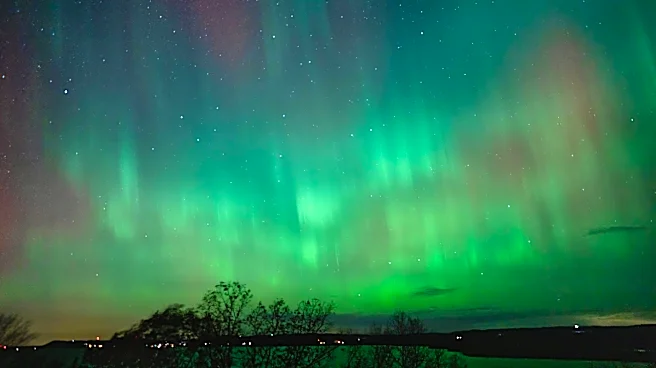
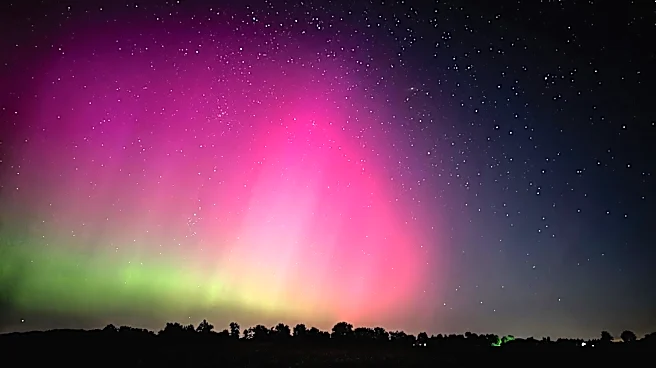
Observers hoping to catch a glimpse of the northern lights should aim to view them between late evening and early morning, particularly around midnight when geomagnetic activity peaks. Clear skies are essential, as cloud cover can obstruct the view. Those in areas with potential visibility are advised to find locations away from city lights to maximize their chances. While the lights may appear as a subtle glow on the horizon in some areas, they can be more vivid in photographs. Patience is key, as auroras can be unpredictable even under ideal conditions.