
What's Happening?
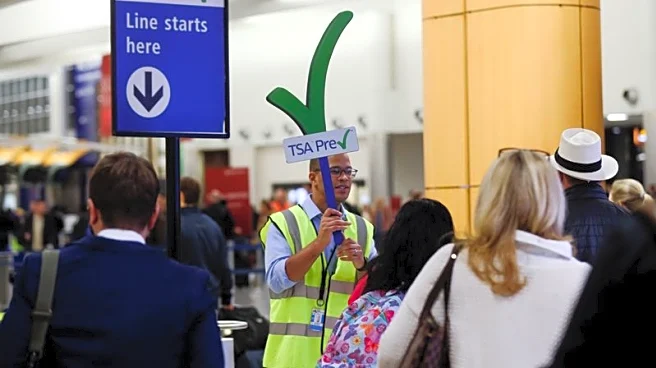
The Department of Homeland Security (DHS) has reversed its decision to suspend the TSA PreCheck program amid a partial government shutdown. Initially, DHS announced that both TSA PreCheck and Global Entry would be paused to conserve staff during the funding
lapse. However, following backlash from airlines, airport authorities, and business travel organizations, DHS decided to keep TSA PreCheck operational. This decision was made after consultations with the White House and the Transportation Security Administration. While TSA PreCheck lanes will remain open, Global Entry kiosks at airports and land borders are still suspended. Customs and Border Protection (CBP) officers assigned to Global Entry have been redeployed to standard inspection booths, leading to longer wait times for travelers returning from overseas.
Why It's Important?
The decision to keep TSA PreCheck operational is significant as it helps avoid potential chaos at airport security checkpoints, which could have resulted in missed connections for the 30 million travelers enrolled in trusted-traveler programs. The suspension of Global Entry, however, highlights the vulnerability of fee-funded mobility programs to political disputes. Industry groups argue that suspending a self-financed program like Global Entry during a budget fight is fiscally unsound. The situation underscores the need for legislative measures to protect such programs during funding gaps, similar to protections for the air-traffic-control system. The ongoing suspension of Global Entry could impact international travelers and businesses relying on efficient cross-border travel.
What's Next?
In response to the suspension of Global Entry, airlines are preparing contingency staffing at international arrival halls and advising travelers to allow extra time for customs inspections. Companies with frequent cross-border staff may consider shifting meetings to virtual formats or routing trips through pre-clearance airports unaffected by the Global Entry freeze. Lawmakers are drafting bipartisan legislation to secure the operations of PreCheck and Global Entry during future funding gaps. This legislative effort aims to prevent similar disruptions in the future and ensure the continuity of these critical travel programs.