



What's Happening?
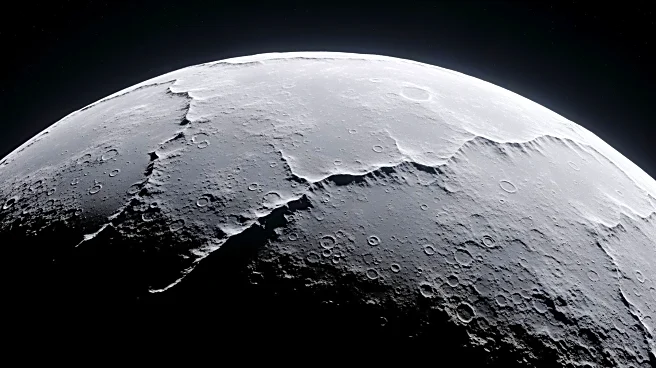
New images from NASA's Lunar Reconnaissance Orbiter Camera have revealed significant tectonic features on the Moon, known as grabens, which indicate that the Moon's crust was pulled apart billions of years ago. These grabens are located around Mare Humorum,
a lunar basin filled with dense volcanic rock. The research, led by Thomas Watters from the Smithsonian's National Air and Space Museum, suggests that the weight of the basalt caused the basin floor to sag, leading to the formation of these valleys. The study of these features provides insights into the Moon's geological history and its tectonic activity during the Imbrian period.
Why It's Important?
Understanding the Moon's tectonic history is crucial for future lunar exploration and potential colonization. The presence of grabens indicates that the Moon's crust has experienced significant stress and deformation, which could impact the stability of future lunar bases. Additionally, these findings contribute to our knowledge of planetary geology, offering a comparison to tectonic processes on Earth. The research also aids in identifying safe landing sites for future missions, as regions with active tectonic features may pose risks to equipment and personnel.