





What's Happening?
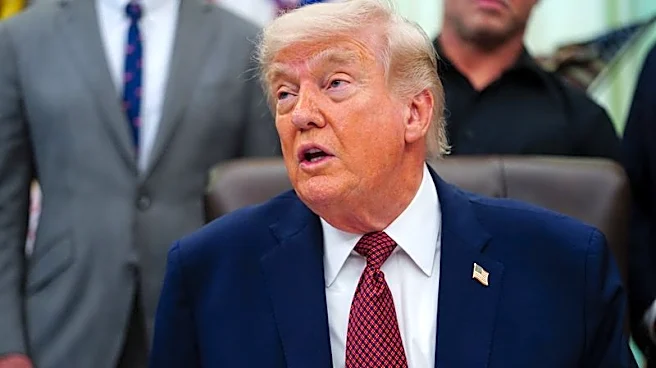
President Trump's approval rating concerning his management of the economy is reportedly declining, as indicated by a recent poll from The New York Times. This development was discussed on Washington Week With The Atlantic, where panelists examined the shifting
perceptions among voters. Yvonne Wingett Sanchez, a staff writer at The Atlantic, highlighted that some Trump voters, particularly in Arizona, are experiencing financial strain due to rising costs. These voters are reportedly making sacrifices within their households to cope with the economic environment, which is affecting their psychological well-being. The discussion included insights from Jeffrey Goldberg, editor in chief of The Atlantic, and other prominent journalists such as Annie Linskey from The Wall Street Journal, Seung Min Kim from the Associated Press, and Tyler Pager from The New York Times.
Why It's Important?
The decline in President Trump's economic approval rating is significant as it reflects broader voter dissatisfaction with the current economic conditions. Rising costs are compelling some voters to alter their spending habits, which could have implications for consumer behavior and economic growth. This shift in perception may influence political dynamics, particularly as voters reassess their support for the administration based on economic performance. The psychological impact on voters, as they navigate financial challenges, underscores the importance of economic policy and its direct effect on household stability. This situation could potentially affect upcoming elections, as economic issues often play a critical role in voter decision-making.
What's Next?
As economic conditions continue to evolve, it is likely that both the administration and political opponents will focus on addressing voter concerns related to the economy. The administration may need to implement strategies to mitigate rising costs and improve economic sentiment among voters. Political leaders and candidates might also prioritize economic issues in their campaigns, seeking to capitalize on voter dissatisfaction. The ongoing dialogue among media and political analysts will likely continue to explore the implications of these economic challenges and their impact on the political landscape.