








What's Happening?
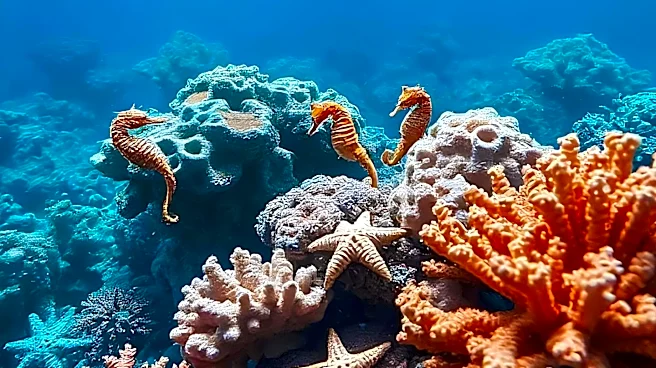
Crown-of-thorns starfish (COTS) are causing significant damage to coral reefs, particularly in the Great Barrier Reef. These starfish, which can grow up to 80cm in diameter, are known for their venomous spines and voracious appetite for hard coral. An
adult COTS can consume up to 10 square meters of coral annually, leading to rapid reef degradation. The starfish feed by extruding their stomachs over coral, secreting digestive enzymes, and converting coral tissue into a digestible form. Efforts to control COTS populations are challenging, as they can regenerate from severed parts. Effective management strategies include injecting them with vinegar or bile salts.
Why It's Important?
The destruction of coral reefs by COTS poses a significant threat to marine biodiversity and the health of ocean ecosystems. Coral reefs support a wide variety of marine life and provide essential services such as coastal protection and tourism revenue. The loss of coral reefs could have far-reaching ecological and economic impacts. Understanding and managing COTS outbreaks is crucial for preserving these vital ecosystems. The study of COTS also highlights the importance of maintaining predator populations, such as giant triton snails, which can help control starfish numbers.
What's Next?
Conservation efforts will likely focus on developing more effective methods for controlling COTS populations and protecting coral reefs. Researchers may explore the use of natural predators or other biological controls to manage starfish outbreaks. Continued monitoring and research are essential to understand the dynamics of COTS populations and their impact on coral ecosystems. Public awareness and engagement in reef conservation efforts could also play a role in mitigating the damage caused by these starfish.