
/images/ppid_59c68470-image-177514269884822623.webp)


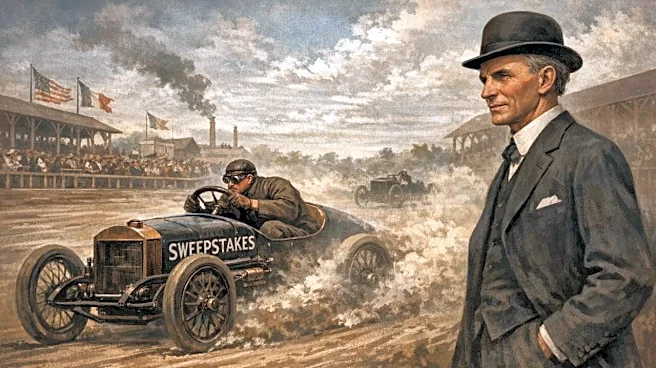
When Henry Ford lined up for a race in 1901, it wasn’t about sport—it was survival. He had already burned through two failed companies and lost investor confidence. The automobile itself was still a gamble, seen by many as unreliable and impractical. Ford needed proof, not promises. So he chose the most visible, unforgiving test available at the time: a head-to-head race against an established rival. What followed wasn’t just a win on track—it reset how people viewed him. That moment gave Ford something he didn’t have before: credibility backed by results.
Back-To-Back Failures Left No Margin For Error
Ford’s early ventures collapsed for familiar reasons: high costs, slow development and disagreements with backers. The Detroit Automobile Company couldn’t deliver a viable product at the right
price. The Henry Ford Company fell apart before it could find direction, with investors eventually forcing Ford out.
By 1901, his reputation had taken a hit. Another failed attempt would likely end his chances of securing funding. Instead of going back to investors with revised plans, Ford took a different route and decided to prove his engineering in real time where results couldn’t be debated.
One Race, One Result, Immediate Impact
Henry Ford’s opponent was Alexander Winton, a recognised name in early American motoring. Winton had already built and sold cars and his reputation carried weight. Ford entered the race as the underdog, with little more than a purpose-built machine focused on speed.
The race itself was short but decisive. Ford’s car outpaced Winton’s, showing not just speed but mechanical reliability under stress. At a time when breakdowns were common, simply finishing strong mattered.
That win travelled fast. It wasn’t filtered through advertising or claims, it was witnessed. Investors who had been hesitant now had something concrete to evaluate. Within months, funding followed, and in 1903, Ford Motor Company was established.
From Track Success To Industrial Scale
Ford didn’t build his company around racing. Once he had attention and backing, the focus shifted to manufacturing. The real breakthrough came in 1913 with the moving assembly line. Production time dropped sharply, costs followed and output increased.
The Model T, introduced in 1908, became the clearest expression of this approach. It wasn’t complex or luxurious—it was built to be used, repaired and produced in large numbers. Standardised parts and a structured production process meant consistency, something the early auto industry lacked.
Looking back, the race was a calculated move at a critical point. Ford didn’t need a series of wins, he needed one clear result that couldn’t be ignored. That’s exactly what he got. It turned a struggling engineer into a credible founder and a single race into the starting point of a global company.