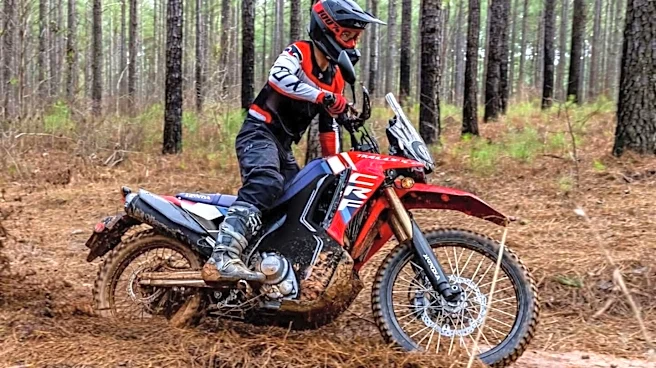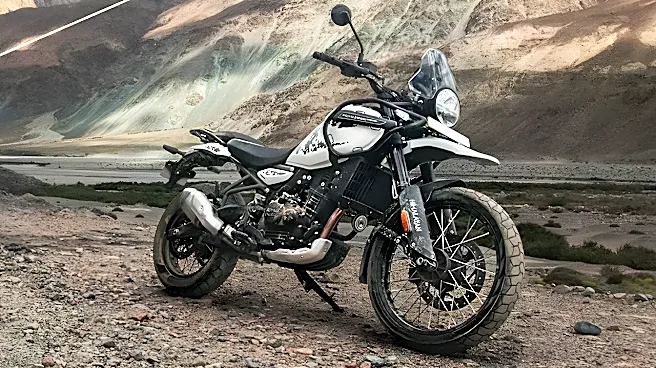

Royal Enfield Himalayan 450 has crossed 38,000 units in global sales and the pace at which it has reached this number is what matters. For buyers, this signals strong demand for a new-generation ADV that’s still early in its lifecycle. It also hints at possible waiting periods and tighter availability in key markets. The bigger story here isn’t just the number, but how quickly the Himalayan 450 has gained traction despite being a complete overhaul over its predecessor.
A Strong Start Across India And Global Markets
The Royal Enfield Himalayan 450 has recorded over 38,000 units in global sales within its first year on sale, with a significant share coming from India. This is notable because it replaced the long-running 411 with an entirely new platform, including the new Sherpa 450 engine.
Exports have also contributed meaningfully to this number, showing that demand is not limited to domestic buyers. The motorcycle’s acceptance across markets indicates that Royal Enfield has managed to align the product with both Indian and international expectations.
For a new platform, these volumes reflect early adoption at scale rather than a slow ramp-up.
What’s Driving These Numbers
The Royal Enfield Himalayan 450’s demand is closely tied to its improved performance and versatility. The new liquid-cooled 452cc engine produces around 40 hp and 40 Nm, offering a noticeable jump over the previous model. This has made it more capable for highway touring while retaining off-road intent.
Another factor is positioning. The motorcycle sits in a segment that is seeing growing interest, with more buyers looking at adventure touring as a practical use case rather than a niche hobby.
Royal Enfield has also priced it competitively for the segment, starting at Rs 3.06 lakh (ex-showroom), which has helped it attract both first-time ADV buyers and existing Royal Enfield customers looking to upgrade.
Also Read: Royal Enfield Classic 350, Hunter 350 Drive 1.12 Lakh Sales In March, Up 11% YoY
What Buyers Should Expect Now
For buyers, strong early demand often brings practical implications. Certain variants and colours may see waiting periods, especially in metro cities where demand is higher. There’s also a perception shift. Crossing 38,000 units quickly gives the Himalayan 450 a strong presence in the segment which makes it a default option for many buyers considering an ADV.
At the same time, sustained demand typically limits discounts in the short term. The key takeaway is this: the Himalayan 450 isn’t just selling well, it’s scaling quickly. And that changes how buyers approach both availability and timing.