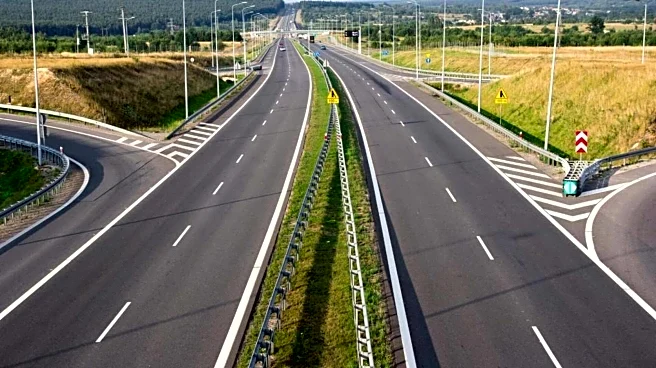




As a new EV owner, I recently decided to take my family out on a weekend trip to Ranthambore National Park in Rajasthan with the hope of testing out the new family car on the highways and possibly spotting an elusive Bengal tiger as a high point. Being a driving enthusiast, I was curious to see how my electric SUV would perform alongside petrol-diesel cars that pollute the environment. We planned our route, which covered approximately 376 km and would take us from the Western Peripheral Expressway, which meant it was going to be a smooth ride, or at least should have been.
I’ve done road trips before. But doing it in my EV was different — charging queues, range paranoia, silent roads and the what-if breakdown fear. Here are the Pros and Cons
based on my experience of taking my family on a road trip in my electric SUV.
My Delhi-Rajasthan EV Road Trip Pros:
Planning an over 300 km road trip in our EV was not as complicated as it seemed initially. We were able to charge the car up to 100 percent at home and planning our charging stops was made easier with quick internet searches and map applications and even mobile apps of third-party charge point operators. In these apps, we could see where exactly we had to stop for a charging station, what kind (CCS2 or others) and the capacity of the fast-charger was available at the point and if it was available or not. Things seemed easy enough as we armed ourselves with smartphones and applications as our co-pilot. Driving an EV inherently feels more comfortable than an ICE-powered car and even high-speed overtakes are a breeze thanks to the instant torque that accelerates the car forward effortlessly.
Delhi-Rajasthan EV Road Trip Cons:
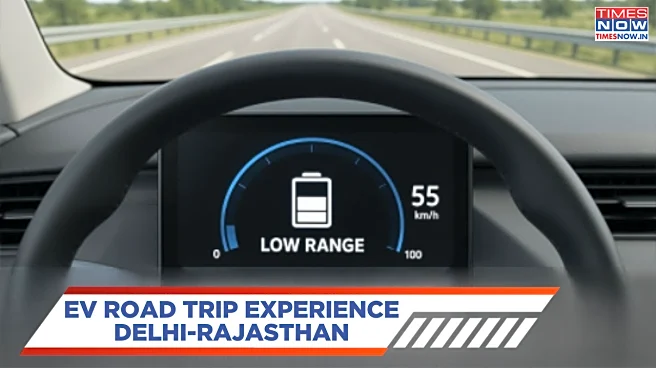
While at no point were my family and I stranded, the experience of highway driving an electric car has been unique and filled with minor panic attacks, to say the least. Firstly, after we hit the open road, I noticed that the vehicle was consuming more energy at 100 kmph and significantly less energy at 80 kmph. Unlike an ICE vehicle, an EV displays its energy consumption in kilometres travelled per kWh of battery energy. This meant that driving at triple-digit speeds would impact our overall range, which would play havoc on our planned pit stops.
For those who are not aware, there is a significant gap in the claimed range and real-world range of EVs across all brands. Realising the same, we had invested in the biggest battery pack option that was available for our electric SUV at the time of purchase. The company claims that it should return up to 490 kms of range on a full charge but we accounted for a more realistic 350 to 375 km range. However, to keep the car within that range metric, I had to improvise and drive slower, which meant that the entire journey took us more time than the 6 to 7 hours that were estimated on the smartphone's map application.
Another big factor that slowed us down was when it finally came time to charge our car mid-way. Firstly, we did not find the 60 kW fast-charging station vacant and the entire operation took us a lot longer than estimated. While waiting for the station to get vacant, I calculated that my electric SUV has a battery pack of 45 kWh, which means that charging my EV back to 100 percent should not take more than 30 minutes, considering we already had 40 percent charge left. However, when our turn came, the power kept going out and we had to restart the charging process multiple times, leading to even more delay. Moreover, as the charger was from a previously unused provider, we had to download their specific mobile application and add money to its digital wallet, which made the process cumbersome and time-consuming. Not to mention having to feed in both personal and financial information unwillingly to a mobile application, so that we are able to charge the EV and not get stranded.
After these hiccups, the rest of the journey went fairly smoothly and we had enough charge for our trips within Ranthambore town and the surrounding areas. However, once we decided to find an EV charger for our trip back, we quickly realised that most charging points that were visible online were placed inside private properties that we did not have access to. After a slight panic attack, we tried our luck at the most high-end resort in Ranthambore and fortunately, they had a couple of public EV chargers tucked inside the parking area. Once again, charging the car took us more time than expected due to power cuts and setup issues.
The journey back to Delhi, in retrospect, was smooth. That is because we now have our expectations in order and the driving and charging experience correlated to what we experienced on day one. Overall, the experience was bittersweet as we now knew that our EV is capable of doing long road trips but the infrastructure still leaves much to be desired and I would think twice before making the same trip again.
Disclaimer: The experience described in this article is a personal account shared by a Times Now reader. It does not represent the views, evaluation, review, or endorsement of Times Now. Any reference to products, services or brands is solely the author’s opinion, and Times Now bears no responsibility for the claims made.




/images/ppid_59c68470-image-177055253274592260.webp)




/images/ppid_a911dc6a-image-177055204730730270.webp)