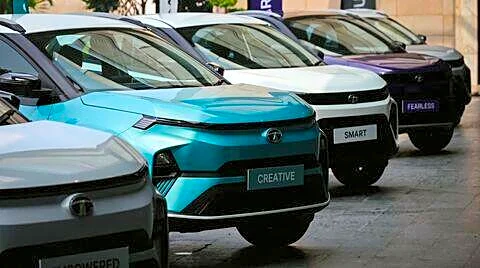



Tata Motors Passenger Vehicles Ltd. reported total sales of 59,701 units in April 2026, up 31.1% from 45,532 units in April last year. The key update is simple: volumes have jumped by over 14,000 units year-on-year, with growth coming from both domestic demand and a sharp rise in EV sales. Domestic volumes alone stood at 59,000 units, reflecting a 30.5% increase. For context, this means almost the entire growth story is being driven by the Indian market, with exports contributing a smaller but faster-growing share.
Domestic Sales Do The Heavy Lifting
If you break the numbers down, the domestic market accounts for nearly the entire volume. Out of 59,701 units sold in April, 59,000 units came from India. That’s a gain of 13,801 units over April 2025, which shows how strongly demand
has held up in the home market.
Exports, while smaller in absolute terms, grew faster. Tata Motors sold 701 units overseas compared to 333 units a year ago, translating to a 110.5% increase. It’s not a volume story yet, but it does point to expanding international traction. Put together, both segments pushed total growth past the 30% mark for the month.
EV Volumes Rise Faster Than The Overall Market
Electric vehicles stand out in this data set. Tata recorded 9,150 EV sales in April 2026, up from 5,318 units last year. That’s a 72.1% jump, which is more than double the overall growth rate of 31.1%.
What this shows is a clear shift in mix. EVs are not just adding incremental volume; they are growing at a much faster pace than the rest of the portfolio. Even without model-wise splits, the numbers indicate that electrification is becoming a more meaningful part of monthly dispatches.
Also Read: Upcoming Cars In May 2026 - MG Majestor, Tata Sierra EV And More
What These Numbers Actually Indicate
A 31% increase in a single month usually points to more than just seasonal demand. The gains are broad-based, with domestic sales, exports and EVs all moving up at the same time.
What this really means is buyers are continuing to spend across segments, but with a visible tilt towards electric options. Higher EV volumes also suggest improving acceptance beyond early adopters.
For buyers, rising volumes typically translate into better service reach and parts availability over time. The flip side is that strong demand, especially in EVs, can stretch waiting periods. Overall, April 2026 reflects a market that is still expanding, with electrification playing a bigger role in that growth.