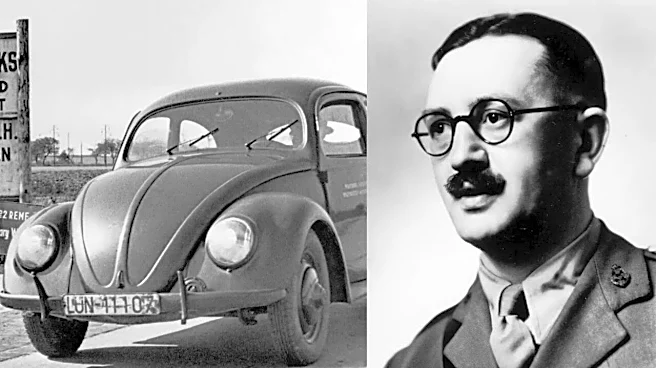


The survival of Volkswagen after World War II comes down to one man, Ivan Hirst. In 1945, the Wolfsburg factory was damaged, shut, and close to being scrapped. Hirst was not sent to revive a car company. He was there to manage what remained. But instead of shutting it down, he saw that the plant could still function. That decision to repair and restart production kept Volkswagen alive at a time when it could have disappeared completely.
A Factory Everyone Had Given Up On
When Hirst arrived in Wolfsburg, the situation was bleak. The factory had been hit by air raids, machinery was damaged and there was no clear plan for civilian production. Volkswagen’s association with the war only made things more complicated.
There were active discussions about dismantling the plant and sending
its equipment abroad. Other carmakers were approached, but none showed interest. At that point, Volkswagen was not seen as a viable business. The expectation was that operations would shut down.
The Call That Changed Everything
Hirst took a different view. He focused on what could be done immediately rather than long-term plans. The machines could be repaired. The workforce was still available. The factory could produce vehicles again.
He restarted limited production of the Beetle and secured an order from the British Army for thousands of units. That gave the plant a clear purpose and kept production lines active. Workers returned, and the factory began operating again.
It was not a strategic revival plan. It was a practical decision based on available resources. But it prevented the factory from being dismantled.
Also Read: Volkswagen Taigun Facelift Variants Compared: Which One Offers The Best Value?
From Survival To Something Bigger
Hirst’s actions did not instantly turn Volkswagen into a global brand, but they ensured survival at a critical moment. With production stabilised, the company gradually shifted toward civilian manufacturing. The Beetle became central to this transition.
Over time, Volkswagen expanded into multiple markets and grew into a major automotive manufacturer. The turning point remains clear. If the factory had been dismantled in 1945, that growth would not have happened.
What stands out is how one operational decision changed the course of the company. Hirst did not set out to build a global automaker, but his actions made it possible.