
/images/ppid_59c68470-image-178495752763329825.webp)
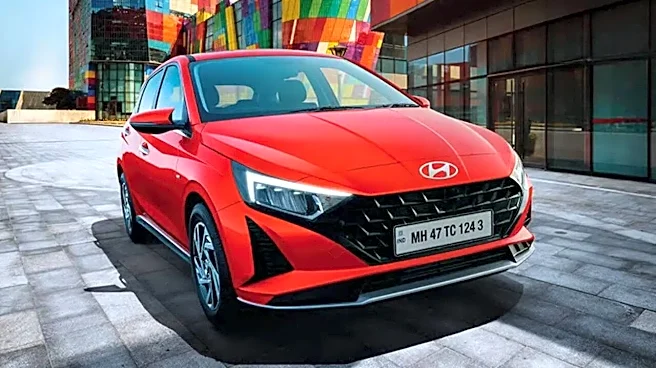
The Hyundai i20 hatchback has crossed 15 lakh units sold in India, a milestone it took nearly 18 years to reach since first going on sale in December 2008. That works out to roughly 83,000 units a year on average across three generations, in a segment that's shrunk considerably as SUVs have taken over Indian buyer preference. This matters because Hyundai has already unveiled a fourth-generation i20 in Brazil this June without confirming an India launch, leaving the current, third-generation model as the only option for now. Here's how the i20 got here and what buyers are actually choosing when they pick one today.
How The i20 Reached This Milestone
Sales progressed steadily rather than in a sudden burst: 1 lakh units by 2010, 5 lakh by 2015, 10 lakh by 2019, and now 15 lakh in 2026.
The first-generation i20 replaced the Hyundai Getz and is credited with helping create India's premium hatchback segment, offering a sunroof, automatic climate control, a cooled glovebox as well as 6 airbags depending on trim. The second-generation Elite i20, launched in 2014, turned out to be the most successful of the three. Hyundai sold a total of 8 lakh units of this model across its seven-year run alone, more than half the car's total lifetime sales in a shorter window than either of the other two generations.
What You Actually Get Today
The current third-generation i20, on sale since 2020 and facelifted in September 2023, is the first to offer a turbo-petrol engine, though that's restricted to the sportier N Line variant. Hyundai discontinued the diesel option in 2023, leaving buyers with just two petrol choices: an 83hp 1.2-litre naturally aspirated engine paired with a 5-speed manual or CVT and the N Line's 120hp 1.0-litre turbo-petrol with a 6-speed manual or 7-speed dual-clutch automatic. Prices range from Rs 6 lakh to Rs 10.63 lakh for the standard car and Rs 9.27 lakh to Rs 11.74 lakh for the N Line version. All mentioned prices are ex-showroom figures.
Why This Milestone Matters Right Now
The i20 competes against the likes of the Maruti Suzuki Baleno, Toyota Glanza and Tata Altroz, all of which have seen more recent updates or stronger monthly sales momentum in a hatchback segment that keeps losing ground to compact SUVs. With a fourth-generation model already revealed abroad and an expected India arrival by late 2026 or early 2027, current i20 buyers will have to wait significantly more till we get a definite launch date from the brand.


/images/ppid_59c68470-image-17851300633255318.webp)





/images/ppid_59c68470-image-178489002695741175.webp)