
/images/ppid_a911dc6a-image-177070952852720132.webp)
/images/ppid_a911dc6a-image-177070952776072175.webp)

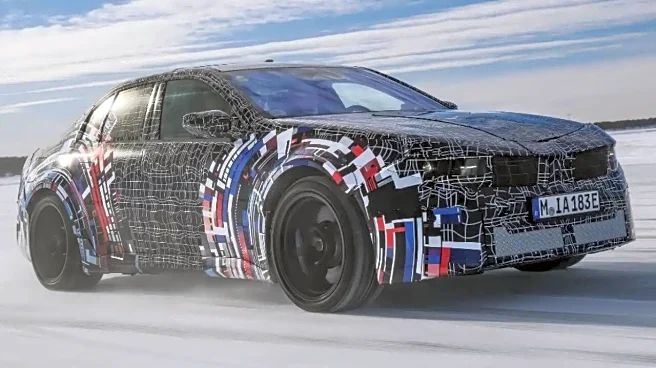
BMW has revealed key technical details of the upcoming all-electric M3, ahead of its global debut planned for 2027. The BMW M3 EV will mark a major shift for the brand’s performance division, moving its most iconic sports sedan to a fully electric platform. It will be based on BMW’s next-generation Neue Klasse architecture and is expected to use a quad-motor setup, one motor for each wheel. The focus is on delivering high performance while retaining the driving character associated with the M badge. BMW has also confirmed features such as simulated gearshifts and synthetic engine sound to recreate a familiar performance feel for enthusiasts.
Also Read: BMW India Posts Highest-Ever Annual Sales As SUVs And EVs Drive Growth
Quad-Motor Powertrain Setup
The electric M3 will
use a four-motor configuration, with independent control over each wheel. This setup allows precise torque vectoring, improving traction, cornering stability, and overall control. Unlike conventional all-wheel-drive systems, the quad-motor layout can distribute power instantly based on driving conditions.
The combined output could approach or exceed 1,000 bhp, placing the M3 EV among the most powerful sedans ever developed by BMW.
Simulated Gear Shifts and Sound
BMW has confirmed that the electric M3 will feature simulated gear changes. These are designed to replicate the sensation of shifting gears in a combustion-engine performance car. The system alters torque delivery to create distinct “shift” moments during acceleration.
Along with this, the M3 EV will get synthetic engine sounds. These sounds are not meant to imitate traditional engines directly but to provide feedback and a sense of speed, helping maintain driver engagement.
Neue Klasse Platform And Battery Tech
The electric M3 will be built on BMW’s Neue Klasse platform, which is designed exclusively for electric vehicles. This architecture supports higher energy density batteries, faster charging, as well as improved thermal management.
BMW claims this platform will offer up to 30% better efficiency and charging speeds compared to its current EV technology. The battery layout is expected to improve weight distribution and lower the car’s centre of gravity.
Performance And Handling Focus
With individual motor control and advanced software, the M3 EV will rely heavily on digital chassis management. Torque vectoring, stability systems, and traction control will be deeply integrated.
This setup allows engineers to tune driving characteristics for different modes, ranging from controlled daily driving to aggressive track-focused performance.
Also Read: New Tata Punch Vs Maruti Suzuki Fronx — Price, Specs And Features Compared
What This Means For The M Brand
The electric M3 represents BMW’s approach to keeping performance cars relevant in an electrified future. Instead of relying only on raw power, BMW is focusing on control systems, driver feedback, and dynamic balance.
/images/ppid_59c68470-image-177071004258558281.webp)

/images/ppid_59c68470-image-177071011457677600.webp)
/images/ppid_59c68470-image-177071015030845145.webp)
/images/ppid_59c68470-image-177071008324940804.webp)
/images/ppid_59c68470-image-177071007375437723.webp)
/images/ppid_59c68470-image-177071003213418150.webp)
/images/ppid_59c68470-image-177071011165153667.webp)
/images/ppid_59c68470-image-177071003473193707.webp)
/images/ppid_59c68470-image-177071002745745499.webp)
/images/ppid_a911dc6a-image-177070970111222524.webp)
