

/images/ppid_59c68470-image-178178259340436753.webp)



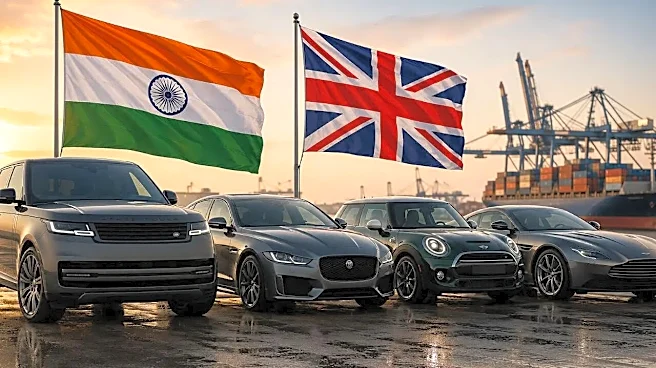
India-UK Trade Deal has finally progressed from negotiations to implementation. The Comprehensive Economic and Trade Agreement, or CETA, will come into effect on July 15, 2026, after being signed in London in July last year. It is set to reshape the country's luxury car market by changing how British cars are priced. While the deal covers dozens of sectors from textiles to whisky, the car import quota is the part that interests the luxury car enthusiasts the most. Here's a closer look at how the India-UK Trade Deal will affect the automotive industry, and how the car import quota will work.
What Was the Problem With Importing UK Cars to India?
Purchasing a British-manufactured car in India has been extremely expensive until now. The government used to charge an import duty of up to 110% on them.
That means a car worth Rs 50 lakh ends up costing Rs 1 crore or more by the time it reaches a showroom. This kept most UK cars out of Indian hands.
What Changes Under The Deal?
As part of the India-UK Trade Deal, India will allow 3.78 lakh UK ICE (Internal Combustion Engine) cars to be imported at much lower duty rates over the first 15 years of the agreement. The key change: duties will drop from 110% to 10%. But there is a catch. The lower rate applies only to a fixed number of cars each year. And that fixed number is called a quota.
How Does The Quota Work Year By Year?
Under the India-UK Comprehensive Economic and Trade Agreement (CETA), the government has introduced quotas and lower taxes in a phased manner to open the market slowly and protect local factories from sudden competition. Here's how the Tariff-Rate Quota (TRQ) works:
First, it is split across three engine-size categories.
-Large cars (petrol above 3,000cc or diesel above 2,500cc): In Year 1, 10,000 units can enter at 30% duty, down from 110%.
-Mid-size cars (petrol 1,500–3,000cc or diesel up to 2,500cc): In Year 1, 5,000 units at 50% duty, down from 66%.
-Small/mass-market cars (petrol up to 1,500cc): In Year 1, 5,000 units at 50% duty, down from 66%.
This adds up to 20,000 cars in the first year.
By Year 5, the total quota rises to 37,000 units with duty falling to a flat 10% across all three categories. After Year 15, the quota settles permanently at 15,000 units per year at 10% duty.
What About Electric Cars?
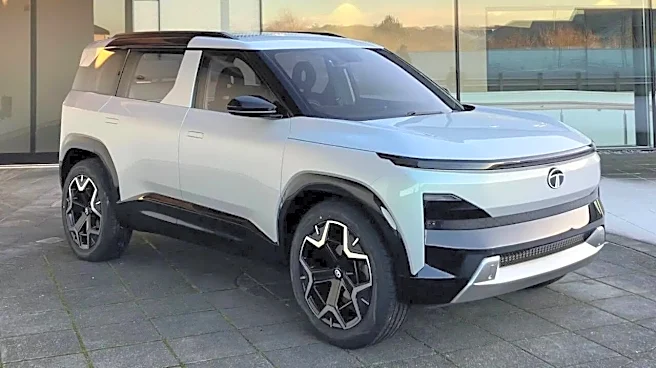
The government has been very thoughtful in this department. For the first five years, there are zero concessions for electric, hybrid, or hydrogen-powered UK cars. This seems to protect domestic EV makers like Tata Motors, Mahindra, and Maruti Suzuki. From Year 6 onwards, however, some luxury UK EVs priced above GBP 40,000 will be allowed in at reduced duty rates, starting at 40–50%, with tight quota limits. It is important to note that no UK car priced below GBP 40,000 (approx. Rs 47 lakh) gets any duty concession at all in the EV segment. This shields the affordable Indian EV market completely.
What Does India Get In Return?
Car manufacturers in India will get duty-free access to the UK market for hybrid, electric, and hydrogen vehicles from Year 6. The quota for Indian EV exports to the UK can grow to 88,000 units per year from Year 15 onward. This is a big win for Indian manufacturers eyeing the UK as an export destination.
Overall, as you can see, the India-UK car import quota is a carefully designed structure. It opens our market to British cars, particularly the luxury ones, in a phased as well as controlled manner. Simultaneously, it protects Indian automakers in the mass-market and EV space while giving them a growing platform to sell in the UK. Hence, both countries, in theory, walk away with something valuable.





/images/ppid_59c68470-image-178176506670041092.webp)