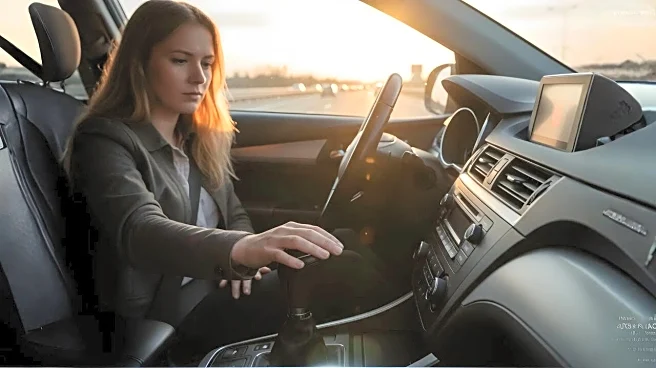



Automatic cars are designed to make life easier as they do not have a clutch pedal, so there are no constant gear changes, just shift to “D” and drive. But what happens when the gear lever refuses to move? Or worse, the car gets stuck in one gear while you are driving?
For many drivers, especially those who recently switched from manual, this situation can feel scary, but, the good news is that in many cases, the problem is minor and can be handled calmly, until you reach a workshop. Let’s have a look at the simple tips and tricks to tackle this situation.Understand the Situation
An automatic gearbox can get “stuck” in two common ways and each situation has different causes and solutions.
- The shifter won’t move out of “Park”.
- The car is stuck in one gear while driving, which is often called “Limp Mode”.
If the Gear Is Stuck in Park
Modern automatic cars have a safety system that prevents shifting out of Park unless the brake pedal is pressed.
Step 1: Check Your Brake Lights
Press the brake and ask someone to see if the brake lights turn on. If they do not, the brake light switch may be faulty. The car doesn’t “know” you’re pressing the brake, so it won’t release the gear.
Step
2: Use the Shift Lock Release
Near the gear lever, you will find a small plastic cover or slot. Remove it gently using a key or screwdriver. Inside, there is a manual override button. Press it while holding the brake pedal. This allows you to shift into Neutral. However, this is only a temporary solution to help you move the car.
Step 3: Rock The Car, If Parked On A Slope
If the vehicle is parked on a steep hill or slope, pressure builds on the transmission’s parking mechanism. You can ask someone to help and gently rock the car while you try shifting. This will relieve tension created in the machine.
Also Read: MG Majestor SUV All Set To Launch Today In India – What To Expect
If the Car Is Stuck in One Gear While Driving
Sometimes the car refuses to shift up and stays in second or third gear, this is called “Limp Mode.” The car enters this mode to protect itself from damage.
Step 4: Try The Reboot Method
Pull over safely. Turn off the engine. Wait for a minute and restart, as sometimes this resets minor electronic glitches.
Step 5: Check Transmission Fluid
Low or dirty Automatic Transmission Fluid (ATF) can cause shifting problems. If your car has a dipstick, check the level and top it up if needed.
What Could Be the Real Cause?
If the issue continues, it could be- a faulty shift solenoid, broken shift cable, failed brake switch, faulty Transmission Control Module (TCM) or low transmission fluid. However, it is important to note that- Never force the gear lever, as doing so can cause expensive internal damage.
Automatic transmissions are complex systems. While these steps can save time and stress, they are temporary fixes. If the problem repeats, get the car checked by a professional mechanic.
/images/ppid_59c68470-image-177087262652841.webp)

/images/ppid_59c68470-image-177087259429213293.webp)
/images/ppid_59c68470-image-177087255900918262.webp)
/images/ppid_59c68470-image-177087252723963095.webp)
/images/ppid_59c68470-image-17708725466897211.webp)




/images/ppid_59c68470-image-17708725346551941.webp)