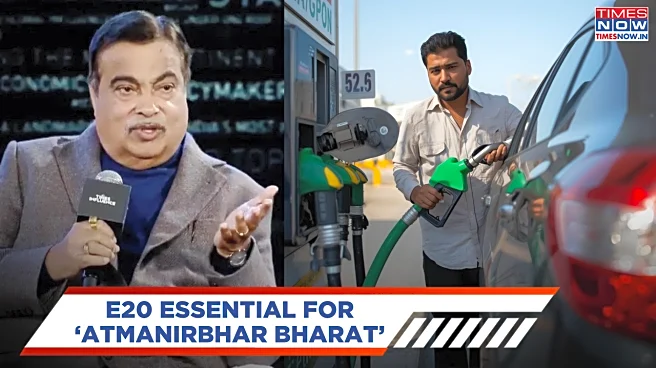

With the E20 fuel policy and its cost on old car owners still in question, Union Road Transport and Highways Minister, Nitin Gadkari recently shared his views at the India Economic Conclave 2025 held in Delhi on December 17. Gadkari actively endorsed the E20 (20 percent Ethanol) fuel policy by stating that countries like Brazil have been using ethanol blends since 1949 and how E20 has led to more income in farmers' pockets and reduced the country's import expenses. He also dismissed critics who have claimed that ethanol production strains the country's water and food supplies and shared his counter argument.
Also Read: IEC 2025 - Tariff Wars And Low R&D Spends Are A Concern For India, Says ACMA's Vinnie Mehta
Are owners of older vehicles paying
the price?: @AyeshaFaridi1 asks Union Minister @nitin_gadkari regarding E20 fuel policy
Watch this video to know his response.@IDFCFIRSTBank #IEC2025 #INDIAECONOMICCONCLAVE pic.twitter.com/cMRNjIYrYb
— TIMES NOW (@TimesNow) December 17, 2025
When asked if owners of old vehicles are paying the price for the E20 fuel policy, Gadkari pointed out that only one verified complaint has come out of Gujarat up till now. He also highlighted how ethanol has been used over the past decades in other countries such as Brazil, which is now at a 27 percent ethanol blend. He attributed his confidence to the tests conducted by ARAI (Automotive Research Association of India) over a span of two years and dismissed the outcry against E20 as a paid campaign. Gadkari further stated, 'The reality is that Rs 22 lakh crore of our country's money is going abroad for oil imports. 40 percent of the pollution in Delhi is due to fossil fuels. When we started making ethanol from corn, Rs 45,000 crore went directly into the pockets of farmers in Uttar Pradesh and Bihar. Corn that had a market price of Rs 1,200 per quintal and an MSP (Minimum Support Price) of Rs 1,800 is now fetching farmers Rs 2,600 to Rs 2,800 per quintal. Shouldn’t our imports decrease? Shouldn't pollution decrease? I believe that reducing our imports and encouraging our rural agricultural sector to create alternative biofuels is essential for making India self-reliant (Atmanirbhar).
Talking about the emphasis on EV adoption, Gadkari reminded the forum that the market share of electric vehicles has grown significantly in the last decade and how the cost of lithium-ion batteries has dropped from USD 150 per kWh to USD 55 to 60. The Union Minister also made a special mention on the potential of Aluminium-Air Technology as an alternative fuel to petrol and diesel. 'I was happy to see a student from IIT Delhi experiment with Aluminum-Air technology for five years. Now, instead of petrol or diesel, aluminum plates will act as fuel. This has been successful, and Ford even gave him an award for it. In the future, with developments in alternative chemistry, a day will come when India’s imports will end.' Gadkari said.
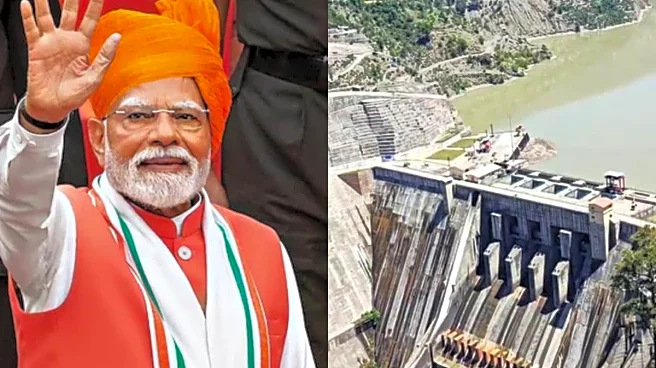
Coming back to the E20 fuel policy, the Union Minister also addressed critics who have claimed that ethanol production strains the country's water and food supply and said 'India does not lack water, it lacks water management.' He clarified his point by telling the forum, 'I have prepared 47 projects to transport water from one region to another. For example, in Andhra Pradesh, 1,300 TMC (Thousand Million Cubic Feet) of water from the Polavaram dam was flowing directly into the sea while people were fighting over water. We planned to divert excess Godavari water to the Pennar, then to the Krishna, and finally to the Kaveri in Tamil Nadu. I sat down with the leaders of both states and explained that there is enough water for everyone. Similarly, Haryana, Punjab, and Delhi are fighting. At independence, three rivers went to India and three to Pakistan. We were letting our share of water flow into Pakistan. I decided to stop that and take our water. Just by stopping the Indira Canal supply, we had provided water to seven districts. The damage caused by floods in Bihar and the Brahmaputra region costs us nearly Rs 3.5 lakh crore annually. Better management is the answer.
Keep reading Times Now Auto for more instant updates on the automotive industry and policy.