
/images/ppid_59c68470-image-177077753316323586.webp)
/images/ppid_a911dc6a-image-177077683848562681.webp)
/images/ppid_a911dc6a-image-177077603394625504.webp)
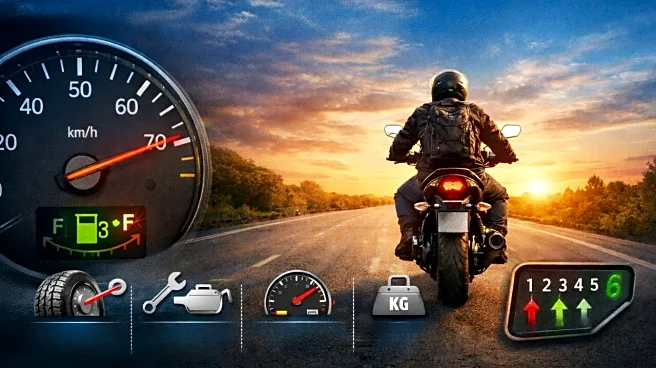
Improving bike mileage is one of the most practical ways to reduce fuel costs and extend the life of your motorcycle. Factors such as riding habits, maintenance condition, tyre pressure, as well as load directly affect fuel efficiency. Many riders experience lower mileage due to aggressive throttle use, delayed servicing, or incorrect tyre inflation without realising its impact. Whether you ride a commuter bike or a performance motorcycle, small changes in daily usage can lead to noticeable improvements in fuel economy. These five simple tips are based on mechanical fundamentals and they work across all engine capacities. Following them consistently helps maintain steady mileage, smoother performance, and reduced long-term maintenance costs.
Also Read: Planning to Sell Your Vehicle? Unpaid Toll Dues Can Block The NOC And Transfer
Maintain Correct Tyre Pressure
Tyre pressure plays a major role in determining fuel efficiency. Under-inflated tyres increase rolling resistance, forcing the engine to work harder and consume more fuel. Over-inflated tyres reduce grip and affect ride stability. Always check tyre pressure when tyres are cold and follow the manufacturer’s recommended values. Regular pressure checks, ideally once every two weeks, help maintain optimal contact with the road and ensure efficient fuel usage during daily riding.
Ride At A Steady Speed
Frequent acceleration and braking waste fuel. Maintaining a steady throttle at moderate speeds allows the engine to operate in its most efficient range. Riding between 40 to 60 km/h in higher gears usually delivers better mileage on most bikes. Avoid sudden throttle inputs and try to anticipate traffic flow to reduce unnecessary braking. Smooth riding directly translates into better fuel economy and lower engine stress.
Keep Your Bike Properly Serviced
A poorly maintained bike consumes more fuel. Dirty air filters restrict airflow, worn spark plugs reduce combustion efficiency, and old engine oil increases friction. Regular servicing ensures all components operate as intended. Replacing consumables on time helps maintain proper fuel-air mixture and smooth engine performance. Scheduled maintenance is one of the most reliable ways to preserve consistent mileage over long-term ownership.
Reduce Excess Load And Drag
Extra weight directly increases fuel consumption. Avoid carrying unnecessary items in storage boxes or saddlebags. Accessories like large crash guards or luggage carriers also add drag at higher speeds. Keeping the bike light improves acceleration efficiency and reduces engine load. Removing unused accessories and limiting heavy cargo can result in measurable improvements in mileage.
Also Read: 5 125cc Bikes Under Rs 1 Lakh With Best Mileage
Don’t Ignore Chain Maintenance
Chain condition has a direct impact on fuel efficiency and is often overlooked. A dry, dirty or incorrectly tensioned chain increases friction, forcing the engine to work harder. Regular lubrication reduces resistance, while correct chain slack ensures smooth power transfer to the rear wheel. An over-tight chain strains components and wastes energy, while a loose chain causes power loss and uneven acceleration. Cleaning and lubricating the chain every 500-700 km and checking tension can noticeably improve mileage and overall ride smoothness.
/images/ppid_a911dc6a-image-177078063816134902.webp)

/images/ppid_59c68470-image-177078010227674040.webp)

/images/ppid_59c68470-image-177078007003694796.webp)
/images/ppid_59c68470-image-177078013509370726.webp)
/images/ppid_59c68470-image-17707800326593461.webp)


/images/ppid_a911dc6a-image-177077884378925186.webp)
/images/ppid_59c68470-image-177077760046699504.webp)
/images/ppid_59c68470-image-177077752738996998.webp)
/images/ppid_59c68470-image-177077764100798849.webp)