
/images/ppid_59c68470-image-177069019679222018.webp)
/images/ppid_59c68470-image-17706901166498245.webp)
/images/ppid_59c68470-image-177069008086153671.webp)
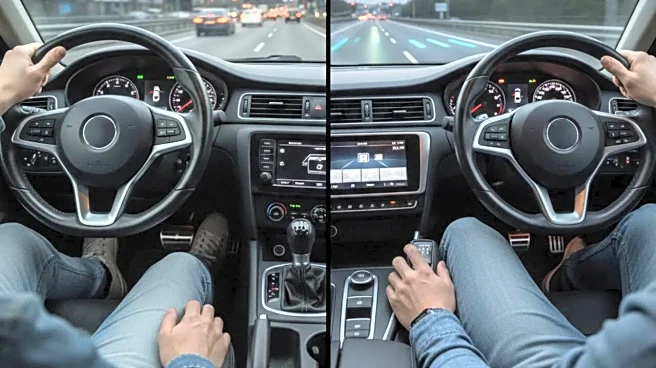
For someone who has driven a manual car for long, switching to an automatic can feel unfamiliar. You may think it is simply a clutch-less version of what you already know, but in reality, an automatic car changes some deeply rooted driving habits. But, the good news is that once you understand a few basics, driving an automatic quickly becomes easier, calmer and more comfortable, especially in today’s traffic-heavy cities like New Delhi, Bangalore, Mumbai etc. As more Indian buyers are keen on switching to automatic cars for convenience nowadays, here are five key points every long-time manual driver should keep in mind before and after making the switch.
1. Train Your Left Foot to Stay Still
This is the most important adjustment as in a manual car, your left foot is constantly active,
working the clutch. In an automatic, there is no clutch pedal and using your left foot to brake, even once, can result in a sudden, violent stop, making it unsafe for the passengers. This happens because your left leg is used to pressing a clutch gently, while brakes respond much more sharply.
The best habit is to rest your left foot on the footrest at all times and use only your right foot for both braking and acceleration. Many new automatic drivers take a few days to break this rooted habit, but once you do, driving becomes smoother.
2. Understand and Control “Creep”
Automatic cars have a built-in feature called creep, which means the car slowly moves forward or backward in reverse, as soon as you lift your foot off the brake, even without touching the accelerator. For someone coming from a manual, this can feel strange at first and can create a hassle.
Instead of riding the accelerator, use the brake pedal to control speed, especially in traffic jams or while parking. Once mastered this, creep actually makes city driving easier, reducing constant throttle input.
Also Read: Skoda Slavia Vs Volkswagen Virtus - Same DNA, Different Personalities, Which Suits You Best?
3. Get Comfortable with the P-R-N-D Gear Pattern
Manual drivers are used to constantly shifting gears, while automatics simplify this with four main positions, which are-
- P (Park)- Use only when fully stopped as it locks the transmission.
- R (Reverse)- For backing up
- N (Neutral)- For long stops or towing
- D (Drive)- For all normal driving
4. Always Brake Before Changing Gears
One important rule in automatics is to always keep your foot on the brake while shifting gears. Whether moving from Park to Drive, Drive to Reverse or any other change, braking prevents sudden movement and protects the gearbox. Most modern automatics won’t even allow gear changes unless the brake is pressed.
5. Anticipate Slight Acceleration Delay
Unlike manuals, where you downshift instantly, automatic cars may take a moment to respond when you suddenly press the accelerator to overtake. This is known as kick-down delay. While modern gearboxes are quick, it is still a good idea to plan overtakes early and allow the car a split second to respond.
Bonus Tip - No Push-Starting
One important thing many manual drivers forget is that- automatic cars cannot be push-started if the battery dies. Keeping the battery healthy becomes even more important.
Switching to an automatic car after years of driving a manual isn’t about unlearning driving, it is about changing habits. Once adjusted, most drivers find automatic vehicles far more comfortable, especially in traffic.
/images/ppid_59c68470-image-177069274594727234.webp)

/images/ppid_59c68470-image-17706927033367981.webp)
/images/ppid_59c68470-image-17706926096387229.webp)
/images/ppid_59c68470-image-177069252798378934.webp)
/images/ppid_59c68470-image-17706926650825720.webp)
/images/ppid_a911dc6a-image-177069204176387593.webp)

/images/ppid_a911dc6a-image-177069207955811628.webp)
/images/ppid_a911dc6a-image-17706920536897918.webp)
/images/ppid_a911dc6a-image-177069203604095714.webp)