

With fuel prices rising, many car buyers are now looking at CNG as a money-saving option. On paper, CNG clearly looks cheaper. It can reduce running cost by 40-50% compared to petrol, which is a big saving for daily users. But the real answer is not that simple. CNG is cheaper only if your usage is high. If you don’t drive much, the savings may not be as big as expected.
When CNG Actually Saves You Money
CNG works best for people who drive regularly. If your monthly driving is around 1,000–1,200 km or more, then CNG starts making financial sense. In fact, over 5 years, a typical user driving 15,000 km per year can save more than Rs 1.5 lakh compared to petrol. That is a strong reason why many city drivers prefer CNG.
Hidden Cost, Maintenance And
Space
CNG cars are not cheap to buy. A factory-fitted CNG version usually costs Rs 80,000 to Rs 1 lakh more than a petrol model, which means you need time to recover that extra cost through fuel savings.
Many people believe CNG cars are low maintenance. That is not fully true as CNG engines need more frequent servicing. Parts like spark plugs and air filters wear out faster due to higher combustion temperatures.
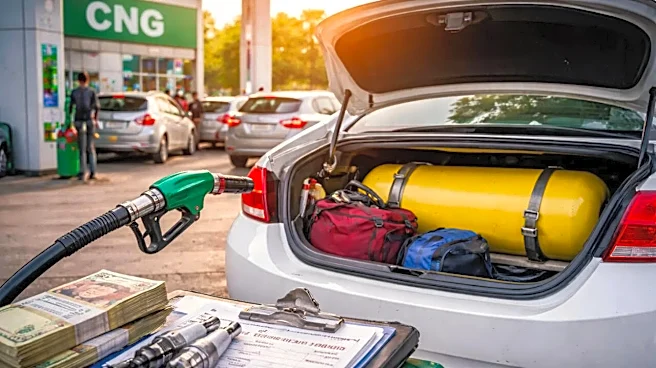
There are also CNG-specific filters that need regular replacement. Every 3 years, the CNG cylinder must be tested for safety. This hydro-testing costs around Rs 2,500 to Rs 4,000. It may not seem big, but over time it adds to ownership cost. One of the biggest practical issues is space. The CNG cylinder takes up most of the boot.
This becomes a problem for families or long trips where luggage space is important. CNG cars usually have slightly higher insurance premiums because of additional components. Resale value also depends on location. In cities like Delhi or Mumbai, CNG cars sell easily. But in smaller towns with fewer CNG stations, resale can be lower.
CNG cars usually have 10-15% less power than petrol. This is noticeable during overtaking or when driving with AC on. Unlike petrol pumps, CNG stations often have long queues. Waiting time can go up to 30 minutes or more in busy areas. Also, a full CNG tank usually gives 200–250 km range, which means frequent refills.
Also Read: Renault Kwid Climber AMT DT - What This Top Variant Offers In Budget
Who Should Buy a CNG Car?
CNG is a smart choice for people who drive daily around 40 km or more and live in cities with good CNG networks. But it may not suit those who drive less than 800 km per month like travel long distances on highways or need full boot space. CNG is definitely cheaper to run. But it is not automatically cheaper for everyone. If your usage is high, you will save money. If not, the higher price, maintenance, and practical compromises can cancel out the benefits.