
/images/ppid_59c68470-image-17808125254439577.webp)

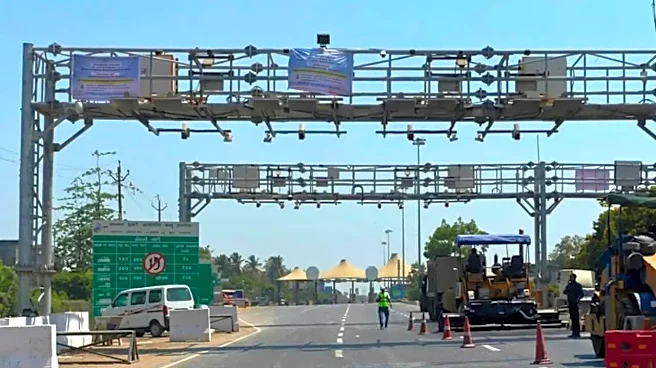
Delhi got its first Multi-Lane Free Flow (MLFF) barrierless toll system last month, inaugurated by Union Minister Nitin Gadkari at the Mundka-Bakkarwala plaza on the Urban Extension Road-II. The system lets vehicles pass through at highway speeds without stopping at physical toll booths, making Delhi the second city in India to get this technology after Gujarat's Choryasi plaza on the Surat-Bharuch stretch of NH-48. If you commute daily into Delhi from Haryana or use the UER-II corridor, this is a direct change to how toll collection works on that stretch — not a pilot, not a proposal, it's live.
How It Actually Works at the Gantry
The MLFF system replaces physical barriers with high-speed ANPR cameras and FASTag readers. Toll fees are deducted electronically while vehicles move
at speeds of up to 80 kmph. The system runs on a combination of RFID sensors, ANPR cameras as well as LiDAR technology for vehicle profiling. What that means in real terms: as your vehicle passes under the overhead gantry, the FASTag on your windscreen gets read, your number plate gets captured and the toll amount is deducted from your linked wallet — all without you touching the brake.
At a conventional toll booth, vehicles narrow into a single lane and spend at least 10 seconds per transaction at the booth itself — during peak hours, that queuing multiplies across hundreds of vehicles. The MCD's existing RFID setup at Delhi's 124 border entry points is a separate system from NHAI's MLFF — the MCD system handles commercial vehicle toll collection at city borders and uses RFID tags but still involves manned booths rather than free-flow gantries.
What's Being Rolled Out Next and What You Need to Know
NHAI has marked 17 fee plazas across nine states — including Delhi, Haryana, Rajasthan, Maharashtra and Tamil Nadu — for MLFF upgrades by September 2026. An additional 108-plus plazas are planned under Phase 2 by March 2027. Gadkari has stated the goal is to make the entire national highway network barrier-free by the end of 2026.
For daily UER-II users, the change at Mundka-Bakkarwala is immediate. For the wider Delhi NCR driver, more corridors will shift to this system before the year is out. One thing worth checking before you use any MLFF-enabled stretch: your FASTag must be active and your linked account must have enough balance. At a free-flow gantry there is no booth to stop at, no cash option and no manual override. If your FASTag fails or your balance is insufficient, the system logs it as a violation — not a payment pending. That's the part many drivers find out the hard way.



/images/ppid_59c68470-image-178107004010867427.webp)

/images/ppid_59c68470-image-178106513489930625.webp)

/images/ppid_59c68470-image-178107004845823091.webp)