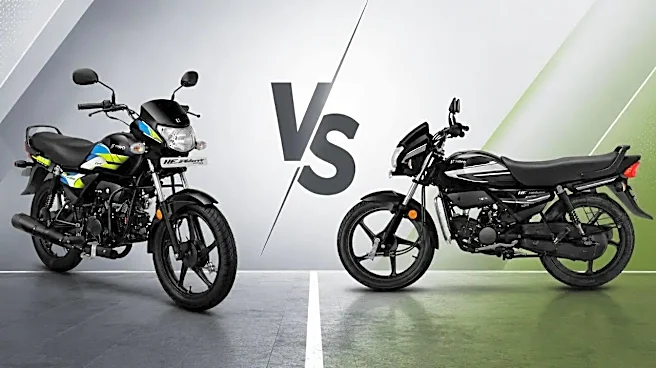

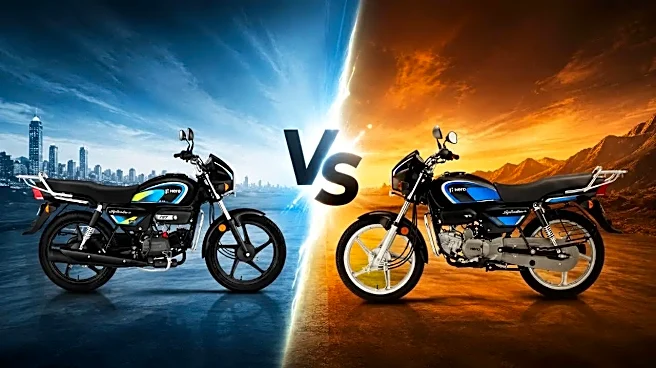
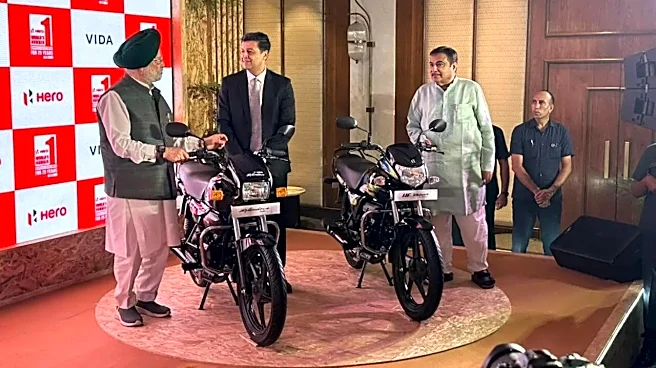
Hero MotoCorp has launched the Hero HF Deluxe Flex Fuel at Rs 72,792 (ex-showroom, Delhi) — the most affordable flex fuel motorcycle in India right now. The brand has also launched the FFV version of the Hero Super Splendor, priced at Rs 82,710 (ex-showroom). It runs on ethanol blends from E20 to E85. The base petrol HF Deluxe starts at Rs 59,477 (ex-showroom), making the gap Rs 13,315. On a budget commuter, that is not a small difference. Here is what that money actually gets you — and whether it is worth it.
Price: The Gap Depends on Which Petrol Variant You Compare
This is where the comparison gets interesting. The base petrol HF Deluxe is Rs 59,477. The HF Deluxe Pro — the top petrol variant with i3S — is Rs 72,620. The Flex Fuel sits at Rs 72,792, just Rs 172 above the Pro. Prices are ex-showroom.
So if you are choosing between the Flex Fuel and the Pro, the price difference is almost nothing. But if you are coming from the base petrol, you are spending Rs 13,315 more. That changes the value calculation significantly. Also worth knowing — the Flex Fuel rolls out in Delhi and select Maharashtra regions in July 2026. If you are not in these areas, you cannot buy it yet regardless of which version you want.
Engine: Same Block, Different Output
Both bikes run the same 97.2cc air-cooled single-cylinder engine. On E20 petrol, the standard HF Deluxe makes 7.9 bhp and 8.05 Nm. On E85, the Flex Fuel steps up to 8.4 bhp and 8.3 Nm — 0.5 bhp and 0.25 Nm more. Ethanol has a higher octane rating than petrol, which allows for better combustion and the small power bump. Hero has reworked the ECU and upgraded injectors, fuel lines and seals to handle the higher ethanol content without degradation over time. If you are running regular petrol or E20 in the Flex Fuel, it works fine — you are not forced to hunt for E85 every time.
Features: What You Actually Gain
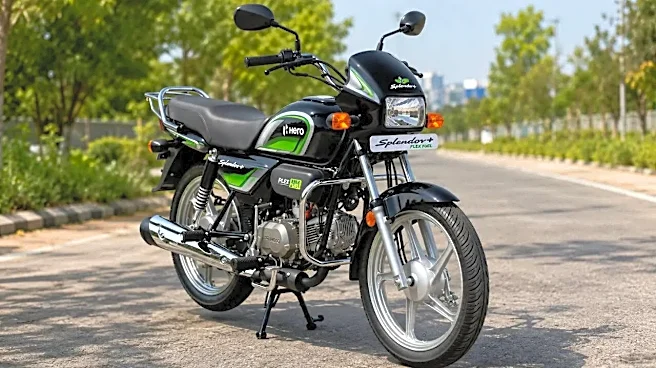
The base petrol HF Deluxe comes with an analogue cluster, LED headlamp with HIPL, tubeless tyres and drum brakes at both ends with integrated braking. The Flex Fuel adds a twin-pod semi-digital console — analogue speedometer on one side, digital fuel gauge on the other — and a side stand engine cut-off as standard. One thing to verify at the dealership: whether the Flex Fuel includes i3S idle-stop-start, which is on the Pro but not confirmed as standard on the Flex Fuel based on current spec listings. Both versions use 18-inch alloy wheels, telescopic fork up front and twin rear shocks.
Running Costs: This Is Where It Gets Relevant
The petrol HF Deluxe claims 70 kmpl on E20. The Flex Fuel should return similar numbers on E20, with variation on higher blends. The real saving opportunity is at the pump — E85 is generally cheaper per litre than petrol where it is available. For someone riding 40 to 60 km daily, that per-litre difference adds up. Against the Pro at Rs 172 more, the Flex Fuel pays for itself almost instantly. Against the base petrol at Rs 13,315 more, the payback depends entirely on how much you ride and whether E85 is genuinely accessible in your area right now.
Which One Should You Go For?
If you are choosing between the Flex Fuel and the HF Deluxe Pro, just go with the Flex Fuel — Rs 172 is nothing and you get a better instrument cluster, side stand cut-off and E85 readiness for essentially the same price. If you are comparing against the base petrol, it only makes sense if you ride a lot daily and have an E85 pump close to home or work. If E85 is not accessible near you, the base petrol HF Deluxe does the same job for Rs 13,315 less. Do not pay the premium on the hope that E85 will be available soon — wait until it actually is.



/images/ppid_59c68470-image-178049752866486349.webp)