





Tata Motors has filed a design patent revealing the dashboard of its upcoming Tata Avinya, the carmaker's first model under a separate luxury EV sub-brand. The leaked images show a layout unlike anything currently sold by Tata with a fully touch-based steering wheel and no signature Tata badge anywhere in sight. For buyers tracking Tata's move upmarket, this is the clearest look yet at how different the Avinya's cabin may feel compared to the Nexon or Curvv parked in the same showroom.
What Does the Tata Avinya's Dashboard Actually Look Like?
The patent shows a wide, curved dashboard that runs across the width of the cabin, with a "T"-shaped Avinya logo built into it rather than tacked on as a badge. A large central touchscreen sits in the middle and appears to handle climate control and most other
functions, since there's barely any physical switchgear visible. Behind the steering wheel is a slim, low-set instrument cluster instead of a tall digital dial. The whole layout leans toward a minimalist, soft-touch finish and going by the curvature on top of the dash, it draws some visual inspiration from how upmarket SUVs from British and German brands lay out their cabins.
Why Doesn't the Steering Wheel Have a Tata Logo?
This seems deliberate. The Avinya is being positioned as a standalone luxury brand sitting above Tata's regular lineup, so the steering wheel carries "AVINYA" lettering instead of Tata's badge similar to how the new Tiago EV dropped the logo for a clean look but taken further here.
The wheel itself uses touch-based controls on both spokes and one of the flat steering stalks is expected to double up as the gear selector, a layout not seen on any current Tata model. Whether these touch controls hold up to everyday use without a learning curve is something only a real test drive will confirm, since patent images can't show how responsive or fiddly they feel in practice.
When Will the Avinya Actually Reach Showrooms?
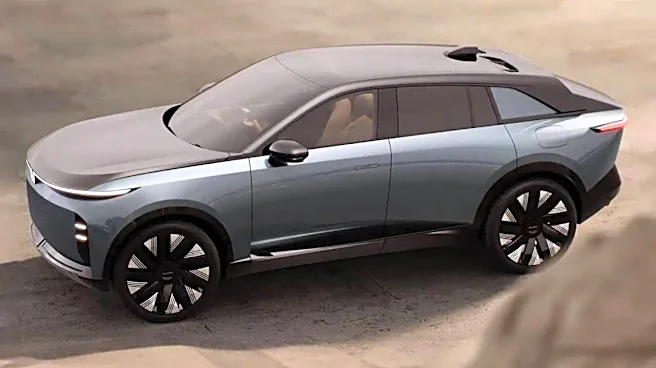
Tata is expected to debut the Avinya brand sometime in 2026, likely starting with a fastback model before a production version of the SUV concept follows. Both are tipped to ride on a heavily localised version of Jaguar Land Rover's EMA platform shared as part of an internal technology transfer within the Tata Group. Production volumes are expected to stay modest with reports pointing to around 24,000 units a year. It reinforces that this will sit as a niche, premium-priced range rather than a high-volume model competing on price.
/images/ppid_a911dc6a-image-17822141209171639.webp)

/images/ppid_a911dc6a-image-178221409052679280.webp)
/images/ppid_a911dc6a-image-178221401966452261.webp)