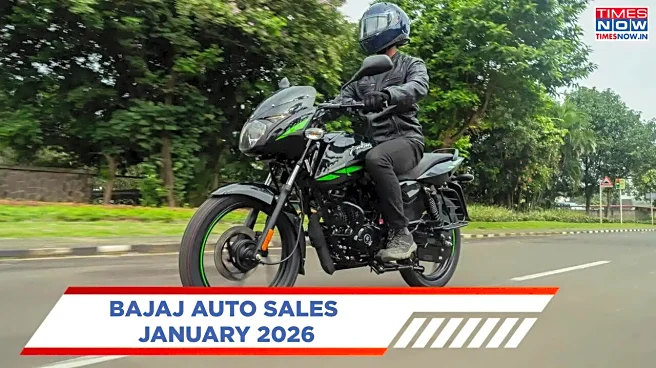




Bajaj Auto, which is one of India’s biggest two-wheeler makers, has landed in the news after receiving significant duty and tax demands from government authorities. While such cases are not uncommon in the industry, the size of the claims and the involvement of lithium-ion battery imports make this development particularly noteworthy.
Customs Raises Rs 76 Lakh Duty Demand on Li-ion Battery Imports
Bajaj Auto informed the stock exchanges that it has received an official customs order from the Commissioner of Customs (Export), New Customs House, Mumbai. This issue now revolves around the classification of imported lithium-ion batteries, which are crucial components used in electric vehicles and other modern automotive systems.
According to the order,
authorities have denied Bajaj Auto’s claim under Notification No. 51/96, which the company believed provided duty benefits. Also they have raised a differential customs duty demand of Rs 76,10,620, added an equivalent penalty, which means the penalty mirrors the duty amount and also imposed a redemption fine of Rs 60,00,000. The customs department believes Bajaj Auto used the wrong tax category for its battery imports and is now demanding the difference with penalties.
Bajaj Auto Says Classification Was Correct
In its regulatory filing, Bajaj Auto stated that- It is confident that its battery imports were classified correctly, the benefits applied under the notification were appropriate, the order is appealable and the company is in the process of filing an appeal. Bajaj also said that the financial impact of the order is not significant enough to affect operations. This indicates Bajaj Auto expects the matter to be resolved without disruption to production or sales.
Also Read: Toyota Mirai Begins Hydrogen Fuel-Cell Testing in India - Here Are The Details
Separate GST Demand Of Rs 34.73 Crore Also Issued
This isn’t the only tax claim Bajaj Auto is dealing with, but the company also received a GST order from the Deputy Commissioner, Rudrapur, raising a demand for Rs 34.73 crore in GST and Rs 3.47 crore in penalty.
Here, the disagreement is over the classification of spare parts supplied by Bajaj Auto.
Tax authorities argue that since Bajaj Auto is a vehicle manufacturer, its spare parts are customised for use in automobiles, and should therefore be taxed as automobile parts, which attract a higher GST rate. This reclassification forms the basis of the much larger GST demand.
Bajaj Auto has not yet commented on whether it will appeal this ruling, but companies typically challenge such orders when interpretations differ.
For more two wheeler, three wheeler and auto industry updates, stay tuned to Times Now Auto.