
/images/ppid_a911dc6a-image-177065992892171021.webp)
/images/ppid_a911dc6a-image-177066002286370480.webp)
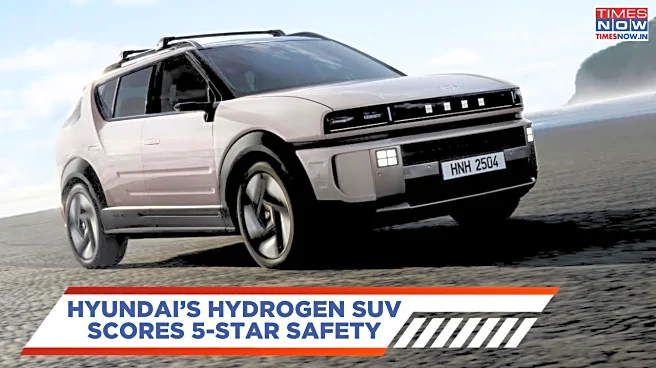
While battery electric vehicles (BEVs) are in the middle of global mass adoption, it is the hydrogen fuel cell that promises to be the most sustainable fuel for the future. With several major carmakers pioneering the alternative, Hyundai had recently joined the bandwagon when it launched the NEXO FCEV at the Seoul Mobility Show in April 2025. It is a hydrogen fuel-cell powered SUV that offers zero tailpipe emissions and a claimed range of up to 826 km on a 5-minute hydrogen refill/charging time. The NEXO FCEV has now scored a 5-star crash safety rating in the Euro NCAP crash tests and here are the details.
Also Read: New MG Hector Base Variant Features Explained - What You Get For Rs 11.99 Lakh
According to the Euro NCAP crash safety assessment,
the Hyundai NEXO FCEV has scored 90 percent in adult protection and 85 percent in child occupant protection. The test results further show that the passenger compartment remained stable in a front offset crash, the SUV also showcased good protection of the knees, femurs and critical body regions. In the full-width rigid barrier test, including side-barrier safety, the Nexo achieved maximum points as well.
What Is The Hyundai FCEV System?
Hyundai's Fuel Cell Electric Vehicle (FCEV) system works by converting hydrogen gas into electricity. The hydrogen is stored in high-pressure tanks and the electricity generated is used to power the electric motor and charge the electric battery pack. The hydrogen fuel cell stack is where the hydrogen gas reacts with the oxygen to generate electricity that is used to drive the motor.
With the mechanical details in order, the Hyundai NEXO FCEV produces 135kW of system power and the fuel cell stack stores 95 kW of energy. The hydrogen tank has a capacity of 156.6 litres and the electric motor produces 201 hp (150 kW) of power output. This gives it a 0-100 kmph time of 7.8 seconds and a top speed of 179 kmph.
Will It Come To India?
While there is no official India launch timeline by the brand, Hyundai had kicked off hydrogen fuel-cell testing in the country in April 2025 with a test mule of the older NEXO. The testing was done in collaboration with the Indian Oil Corporation after both stakeholders had signed a Memorandum of Understanding (MoU) to explore the potential of hydrogen fuel cell vehicles in India.
Keep reading Times Now Auto for more instant updates on all new and sustainable vehicle launches.





/images/ppid_a911dc6a-image-177066053933489438.webp)

/images/ppid_a911dc6a-image-177066058165823644.webp)
/images/ppid_a911dc6a-image-177066053439057758.webp)




/images/ppid_59c68470-image-177066006549840674.webp)

/images/ppid_59c68470-image-177066006557557021.webp)