
/images/ppid_a911dc6a-image-177769283411041814.webp)
/images/ppid_a911dc6a-image-177769203679044092.webp)
/images/ppid_a911dc6a-image-177769210345249117.webp)
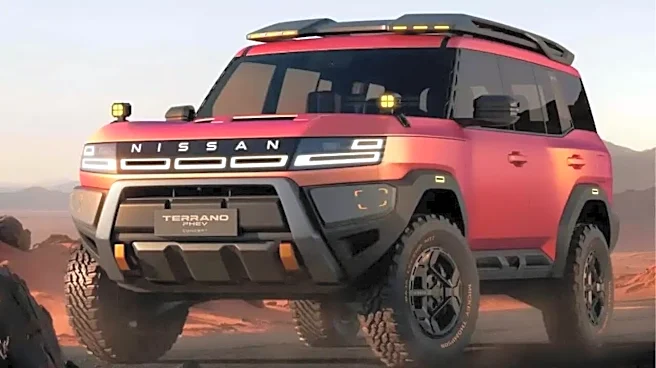
Nissan Terrano has arrived in concept form as a plug-in hybrid SUV, revealed at Auto China 2026. It signals a shift from budget SUVs to larger, electrified off-roaders with higher capability. The new Terrano is no longer a compact SUV; it is positioned as a rugged, premium offering with hybrid tech and off-road intent. Built to combine efficiency with long-distance usability, the concept highlights how traditional SUVs are evolving with electrification without giving up capability.
Plug-In Hybrid Setup And Performance Direction
The Nissan Terrano concept uses a plug-in hybrid (PHEV) setup that combines a petrol engine with dual electric motors. Reports indicate a total system output of up to around 402 bhp, placing it in a higher-performance bracket than typical SUVs in its earlier segment.
The hybrid system allows short-distance electric-only driving while retaining the petrol engine for longer trips. This setup is aimed at reducing fuel consumption in city use while maintaining range for highway travel.
The SUV is also expected to feature all-wheel-drive capability, supported by the dual-motor layout. This improves traction and makes it more suitable for off-road conditions, aligning with its rugged positioning.
Design, Platform And Interior Direction
The new Terrano adopts a boxy, upright design with high ground clearance and a wide stance. Unlike the earlier crossover-style Terrano, this concept leans towards traditional off-road SUV proportions.
Exterior elements include squared wheel arches, skid plates and protective cladding, indicating durability. The design also features modern lighting elements such as LED light bars.
Inside, the concept showcases a digital-first cabin with large displays and connected features. While production details are yet to be confirmed, the layout suggests a focus on technology alongside rugged usability.
Also Read: All About Nissan Magnite - Price, Mileage, Performance And More
Positioning, Rivals And Buyer Impact
The Terrano concept is positioned closer to premium off-road SUVs with its performance and hybrid setup placing it near models like the Toyota Land Cruiser in terms of intent, though not necessarily direct pricing.
For Indian buyers, the key takeaway is direction. SUVs are moving towards electrification without losing their core strengths like off-road capability and long-distance usability.
If introduced in India, factors such as localisation, pricing and charging infrastructure will determine its viability. In practical terms, the Terrano concept reflects a broader shift: future SUVs are likely to combine hybrid efficiency with traditional capability rather than focusing only on fuel economy or performance.





/images/ppid_a911dc6a-image-177769557587284787.webp)

/images/ppid_a911dc6a-image-177769553971055794.webp)
/images/ppid_a911dc6a-image-177769542568390254.webp)