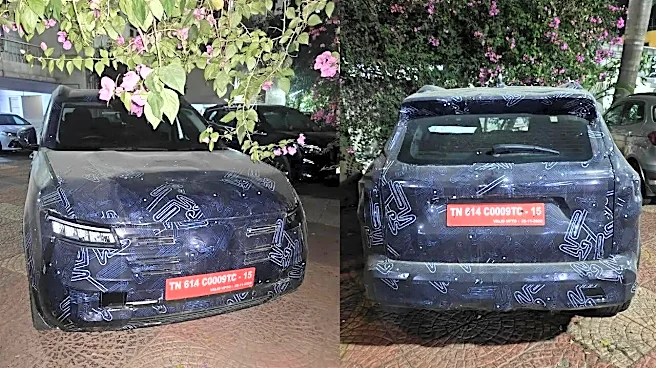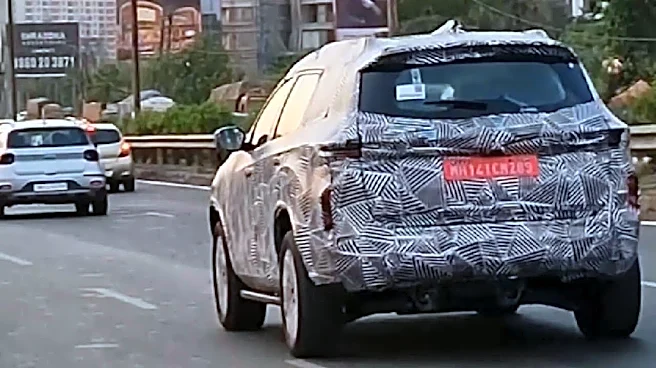

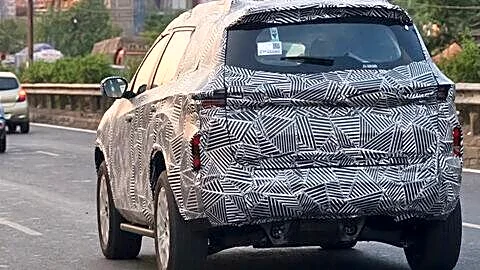
The Tata Safari EV has been caught testing in India and a festive season 2026 launch is where everything points. Internally it is codenamed Tayrona. Once it arrives, it will be Tata's new flagship EV sitting above the Harrier EV. Production is expected to start in August 2026. It goes up against the Mahindra XEV 9S. Expected price will likely fall between Rs 22.5 lakh and Rs 30 lakh (ex-showroom). For families who have been waiting for a seven-seater electric SUV, this is a very competent option you should to watch out for. Read on to learn more
What Is Under The Camouflage
The Tata Safari EV will use the same acti.ev+ platform as the Harrier EV. That is worth saying plainly — this is not a ground-up electric car. It is an ICE-to-EV conversion of the existing Safari body.
That means some packaging compromises that a purpose-built EV platform would avoid, particularly around floor height and boot space with all three rows up.
Two battery options are expected, both carried over directly from the Harrier EV. The 65kWh pack gets a single rear motor making 238 bhp and 315 Nm. The 75kWh pack adds a front motor for AWD and combined output goes to 316 bhp and 500 Nm. Because the Safari is bigger and heavier than the Harrier EV, the range will be slightly lower. The Harrier EV claims 627 km on the larger battery RWD — the Safari EV will likely come in somewhere between 550 and 590 km under ARAI conditions.
The test mule spotted testing keeps the Safari's split LED headlamps and the stepped roofline. EV-specific changes will include a closed front grille, revised front and rear bumpers as well as aero-style alloy wheels matching the Harrier EV's design language. Inside, expect the same triple-screen dashboard as the Harrier EV with different colour and trim choices to separate the two cars visually.
Why This Matters For Indian Buyers
When the Tata Safari EV lands, every Tata SUV in the current lineup — Nexon, Punch, Curvv, Harrier, Sierra, Safari — will have both a petrol and an electric version. No other carmaker in India, Indian or global, covers every SUV segment from Rs 10 lakh to Rs 30 lakh in electric form the way Tata will at that point.
For buyers who need three rows and want to go electric, the Safari EV is the first real answer from a mainstream brand with an established service network. The Mahindra XEV 9S is the closest rival but is yet to launch. The MG Gloster EV exists but operates in a very different price and network bracket. The Safari EV will arrive with Tata's existing charging infrastructure — over 630 fast charging touchpoints across India — the ZConnect connected platform and a dealership footprint that reaches well outside the top 20 cities. That last point matters for a three-row family SUV buyer, who is often not in a metro.
At Rs 22.5 to Rs 30 lakh, the pricing will likely overlap the top Harrier EV but opens the three-row space the Harrier simply cannot address. August production start and festive season launch — that window is roughly October to November 2026. If the timeline holds, the Safari EV will be on sale before Diwali.
/images/ppid_59c68470-image-178047507299039329.webp)