


/images/ppid_59c68470-image-177078253208686535.webp)
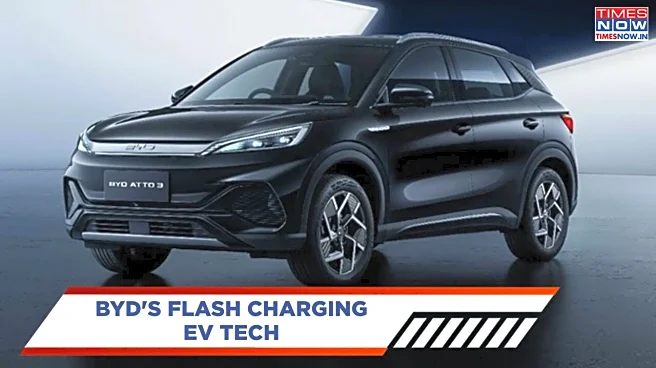
BYD’s flash charging EV technology, first revealed earlier this year, continues to draw attention for its claim of adding up to 400 km of range in around five minutes. Built around a megawatt-level charging platform and a new electrical architecture, the system aims to drastically reduce EV charging times under specific conditions. While the headline numbers are based on controlled testing, the technology highlights how charging speeds could evolve in the coming years. This explainer breaks down how BYD’s flash charging works, the hardware behind it, and what the claims realistically mean for real-world EV usage.
Also Read: Triumph Speed 400, Thruxton 400 And Speed T4 To Get Expensive From January 2026
What Is BYD’s Flash Charging Technology?
BYD’s flash charging system is part of its new Super e-Platform, designed to support ultra-high charging power. The setup is capable of handling charging rates of up to 1,000 kW (1 megawatt), far higher than current fast-charging standards used by most EVs globally. This allows compatible vehicles to add large amounts of energy in a very short time, significantly reducing downtime during long journeys.
Battery And Electrical Architecture Changes
To enable such high charging speeds, BYD has reworked the vehicle’s electrical architecture. The system operates on an 800V-plus platform, which reduces heat generation and energy loss during high-power charging. BYD has also developed a new-generation battery with improved thermal management, faster ion movement, and enhanced safety controls to handle extreme charging loads without compromising durability.
How The 400 Km Claim Works
The 400 km range figure is based on testing under controlled conditions and specific driving cycles. It reflects the amount of energy added during a five-minute charging session rather than real-world mixed driving in all scenarios. Actual range gains will depend on battery size, vehicle efficiency, ambient temperature, and charger capability. BYD has acknowledged that real-world results may vary.
Charging Infrastructure Requirements
A key limitation of flash charging is infrastructure readiness. Megawatt-level chargers are currently rare and require significant upgrades to grid capacity, cooling systems, and safety protocols. BYD has indicated that large-scale deployment will depend on collaboration with charging network providers and local authorities, particularly in high-demand markets.
How It Compares To Existing Fast Charging
Most current EV fast chargers operate between 150 kW and 350 kW. BYD’s flash charging technology significantly exceeds these levels, potentially placing it ahead of many global competitors on charging speed. However, widespread adoption will depend on vehicle compatibility and infrastructure rollout.
Also Read: Car Prices Set To Rise In January 2026 — Check Full List Of Brands Affected
What This Means For EV Adoption
If implemented at scale, flash charging could address range anxiety and long charging times, two major concerns for EV buyers. Shorter charging stops would make EVs more practical for highway travel and commercial use, bringing them closer to the convenience of internal combustion vehicles.
/images/ppid_a911dc6a-image-177078359587862411.webp)

/images/ppid_59c68470-image-177078266899342502.webp)




/images/ppid_59c68470-image-177078257727351100.webp)

/images/ppid_59c68470-image-177078262255493045.webp)